
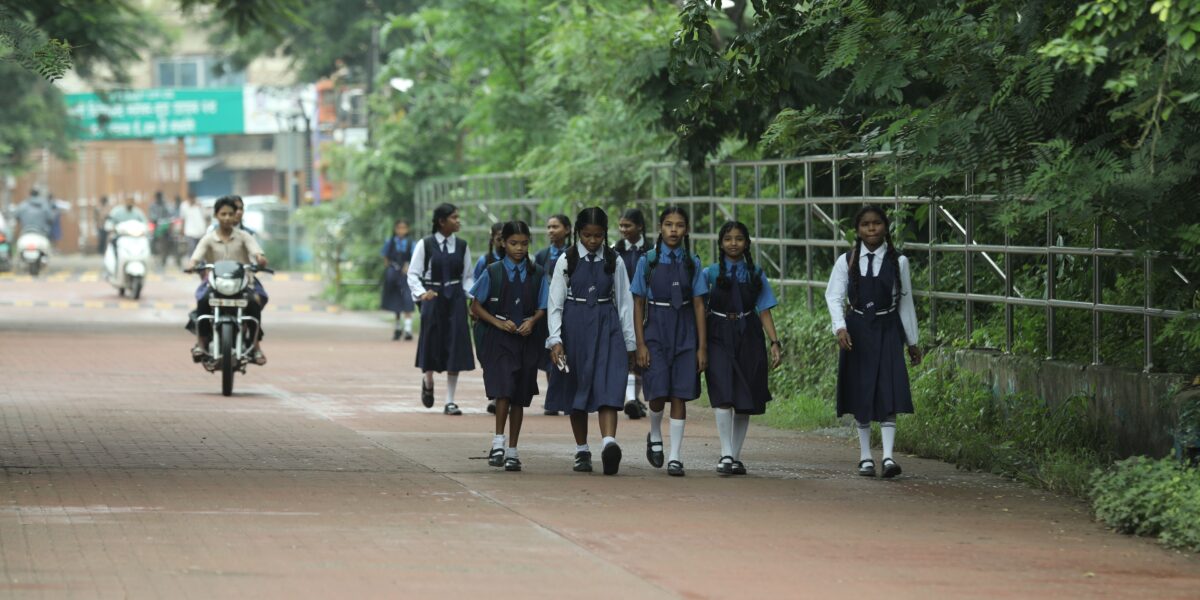
New Delhi :India gets to school and work on foot, by cycle, by bus and on scooters. Cars are the main ride for fewer than one in a hundred students and three in a hundred workers, finds India’s first-ever National Household Travel Survey. So whose streets are we building for?”
The survey, run by the Ministry of Statistics and Programme Implementation (MoSPI), covered about 4.92 lakh households and 18.4 lakh people aged six and above between July 2025 and June 2026. It counts any movement of 1 km or more as travel. For the first time, India has a national picture of how its people actually move every day.
Cars: a small slice of India’s daily trips
For all the flyovers, road-widening and parking we build for them, cars are the main mode for only a tiny share of Indians. And the survey counts them generously: “car” includes personal cars, shared cars, employer-provided cars, ride-hailing taxis and rented or hired cars.
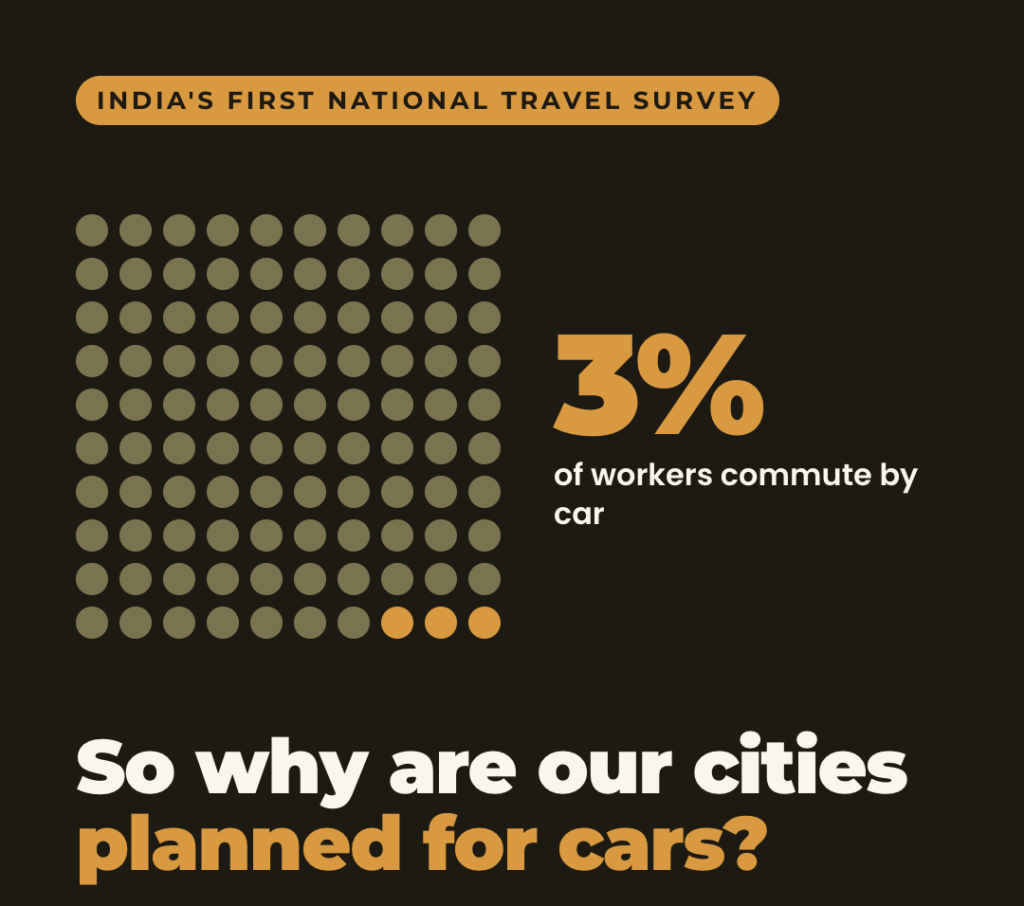
| Trip type (main mode: car) | Rural | Urban | All India |
|---|---|---|---|
| To school or college (% of students) | 0.6% | 1.0% | 0.7% |
| To work (% of workers) | 1.5% | 5.7% | 3.0% |
| Overnight trips (% of households) | 13.0% | 18.0% | 15.1% |
Even in cities, only 5.7% of workers who travel 1 km or more to work go mainly by car. That is about one-ninth the share of two-wheelers (52.3%), and less than those who walk (13.5%). Among urban students, it is one in a hundred.
The car shows up mainly on overnight trips of 50 km or more. Even there, the bus carries more than three times as many households.
So why do our road budgets still revolve around cars? [Internal link: UV Vadodara Atal Bridge flyover piece]
School runs on feet, cycles and buses
Stand outside any school at 8 am and you will see the data come alive. Two in three students (66.4%) travel 1 km or more to school or college. Among them, 37% walk, 29.5% take a bus and 15.8% cycle. That is over eight in ten. Cars? Just 0.7%.
The youngest walk the most. Nearly half (47.3%) of students aged 6 to 14 go on foot. In towns and cities, the bus leads at 33.7%, followed by walking (29.6%) and autos (14.4%). Metro and suburban rail carry only 1.9% of urban students.
Most trips are short: 87.6% of students reach in under 30 minutes. And the rush is real — 35.7% leave between 8 and 9 am.
So the real question is simple. Are the roads around our schools safe for a ten-year-old on foot? [Internal link: UV walkability / safe-routes-to-school piece]
Work rides on two wheels
For workers, the scooter is king. The two-wheeler is the main mode for 42.6% of workers travelling 1 km or more. In urban areas, it is 52.3%. Among urban men, it climbs to 57%.
Public transport trails far behind. In cities, buses carry 9.2% of commuters, and metro or suburban trains 5%. Walking drops to 13.5%.
Urban workers take 27 minutes on average to reach a fixed workplace. About one in five needs more than half an hour.
The survey does not ask why people pick a scooter. But with buses carrying under one in ten urban commuters, the two-wheeler often looks less like a choice and more like a stopgap.
The women’s commute gap
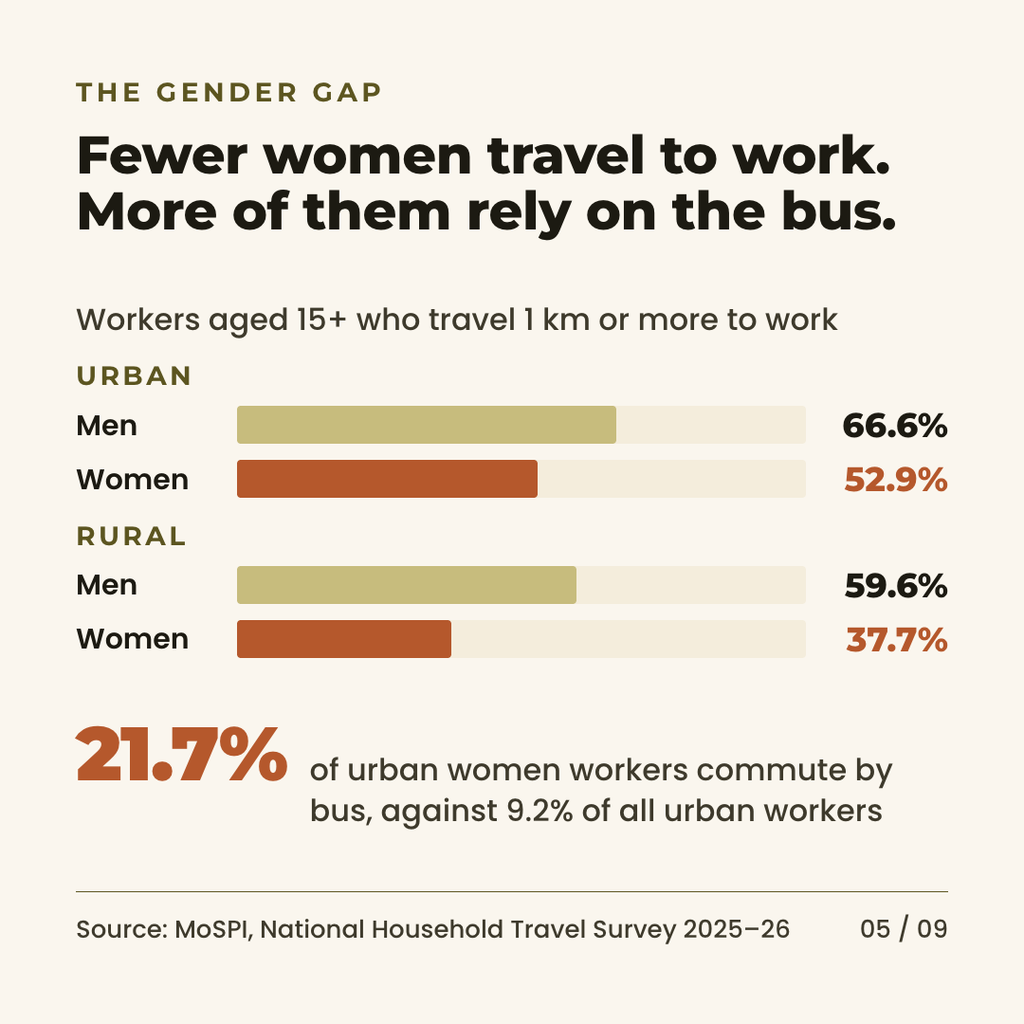
The survey also maps a quieter divide. Only 52.9% of urban working women travel 1 km or more to work. In villages, it is 37.7%. Since trips under 1 km are not counted, the rest work at home or very close to it.
Women lean on the bus. About 21.7% of urban women workers use it as their main mode — more than twice the urban average. They also spend less getting to a fixed workplace: Rs 533 a month, against Rs 835 for men.
And the errands fall on them. Among people making trips for reasons other than work or study, 60.1% of women travelled for unpaid domestic work for their household. For men, it was 51.5%.
This matters for jobs. If the nearest affordable, safe ride decides where a woman can work, then bus routes, street lighting and last-mile links are employment policy too.
What the commute costs
An urban student’s household spends Rs 617 a month on school trips. An urban worker spends Rs 1,044 getting to a fixed workplace. Rural figures are lower: Rs 361 and Rs 612.
These cover only trip costs such as fuel, fares and tolls. Vehicle maintenance and road tax are left out, so owning a scooter costs more than it looks.
Beyond the daily commute
About 11.3% of households made an overnight trip in the four weeks before the survey. Seven in ten (70.2%) of them travelled for socialising, communication or religious practice.
How did they go? By bus (55.8%), followed by intercity rail (17.7%) and car (15.1%). Air travel? Just 0.6%. From the school gate to the family wedding, the bus is India’s workhorse.
The way forward
The survey does not tell cities what to build. But it makes some choices hard to ignore.
- Footpaths and cycle tracks are core infrastructure. Over half of students who travel 1 km or more walk or cycle. Every school zone needs safe crossings, shade and slower traffic.
- Buses deserve the first rupee. Buses carry students, working women and intercity travellers. Bigger fleets, better frequency and dignified stops will serve the most people.
- Plan for the scooter, but don’t stop there. Two-wheelers need safer roads and parking today. Good buses and metros can make them a choice, not a compulsion, tomorrow.
- Put the data to work. The factsheet links state-wise tables. City mobility plans and Smart City projects should be tested against them.
A few caveats. This is a factsheet, with state-level, not city-level, figures. Trips under 1 km are excluded, so walking is likely undercounted. MoSPI also warns against comparing these numbers with its Domestic Tourism Expenditure Survey.
Still, the message is clear. India walks, cycles, rides the bus and zips around on scooters. It is time our streets were designed to say so.