
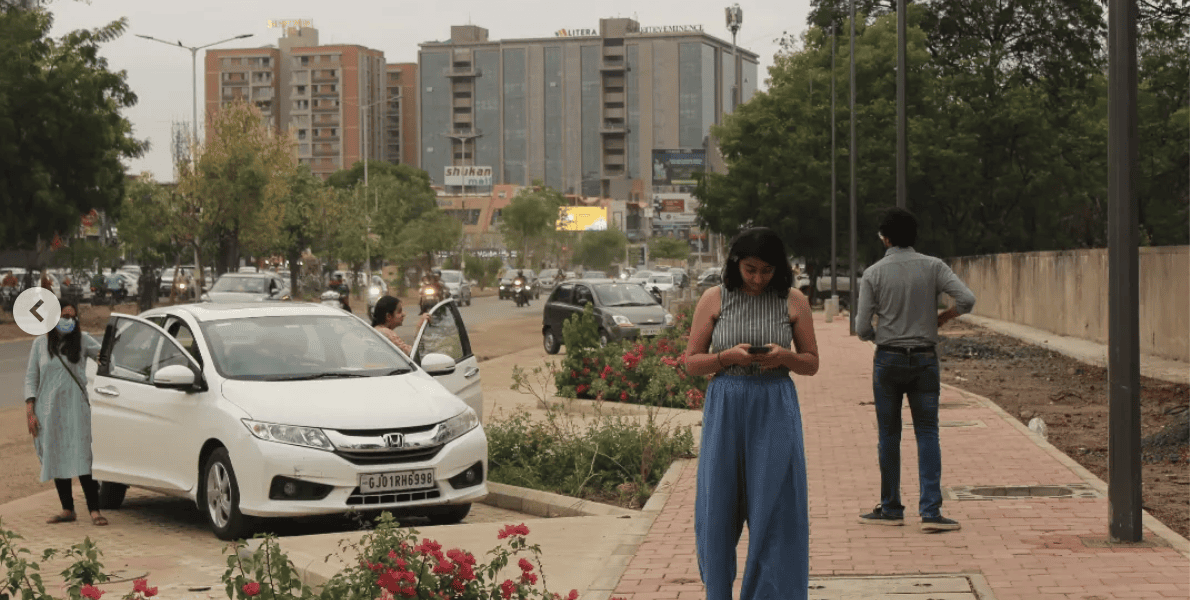
Ahmedabad: What is a good footpath worth? On Science City Road, roughly Rs 13 lakh a year to the average shopkeeper. After the Ahmedabad Municipal Corporation (AMC) redesigned the street with footpaths, safer crossings, traffic calming, organised parking and shade, mean annual shop turnover nearly doubled, from about Rs14 lakh to Rs 27 lakh.
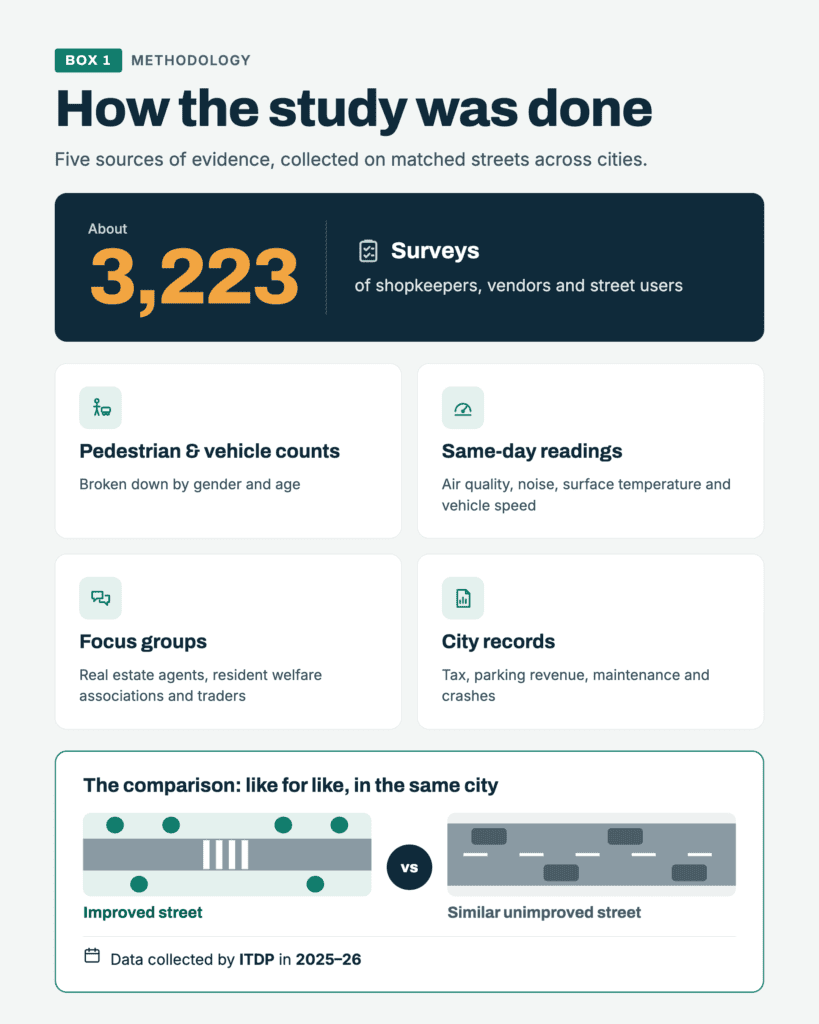
The numbers come from The Healthy Street Dividend, which ITDP India prepared for GIZ under an Indo-German urban mobility programme with the Ministry of Housing and Urban Affairs. Out since July 2026, it calls itself the first multi-city, multi-indicator impact assessment of Healthy Streets in India.
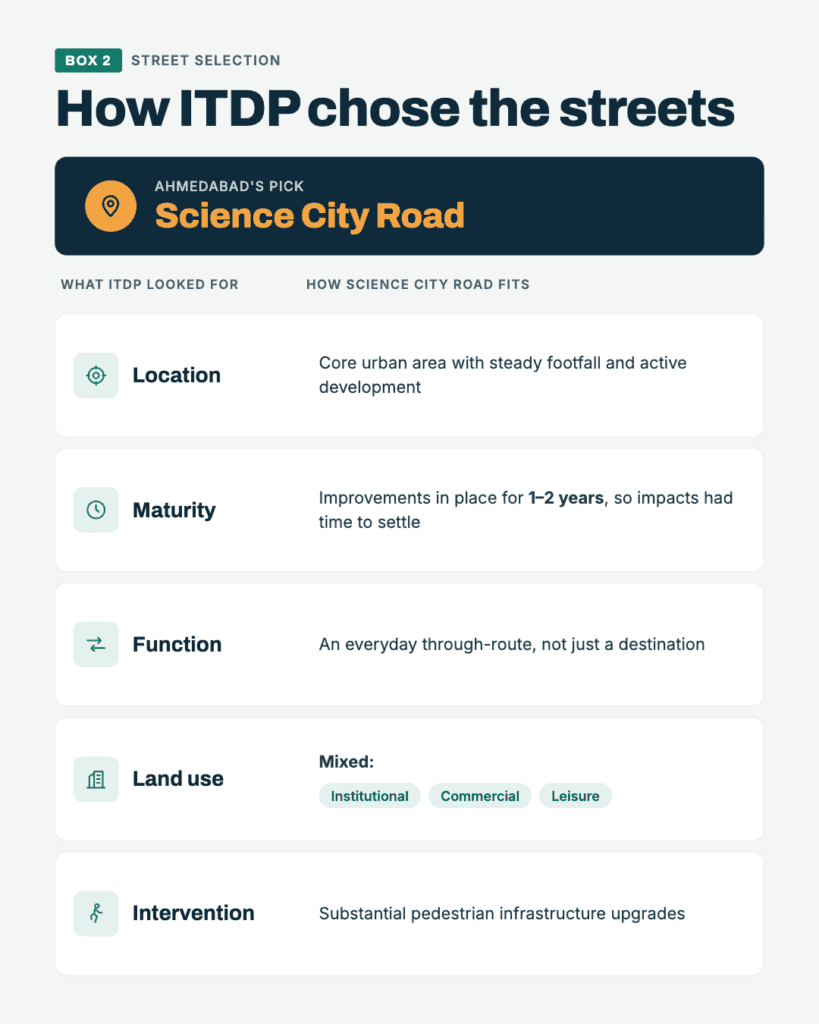
It covers 10 cities: Ahmedabad, Bengaluru, Bhubaneswar, Chennai, Coimbatore, Gangtok, Gurugram, Kochi, Pimpri Chinchwad and Srinagar. In each, the study compares an improved street with a similar unimproved one nearby. In Ahmedabad, that comparison is Sola Road. The question is simple: what happens when a city designs a street for people, and not only for moving cars?
The street that pays for itself
Shopkeepers are not the only winners. Commercial rents on Science City Road are about Rs 108 per sq ft, 80% higher than Rs 60 on Sola Road. Over five years, rents here grew 60%, against 23.7% on Sola Road.
The civic body gains too. Property-tax recovery in the area rose from Rs 24 crore in 2021–22 to Rs 39.3 crore in 2025–26, a jump of 63.7%. Non-residential properties grew by 21%, adding more than 1,400 commercial assessments to the AMC’s rolls.
The street cost about Rs 25 crore. ITDP estimates it returns about 12 paise in property tax every year for every rupee invested. That growth, the report notes, is more than the state’s mandated 5% annual tax hike can explain: higher-value businesses are moving in.
Why footpaths mean footfall
The logic is not complicated. Anyone who has tried to cross a fast road in Ahmedabad’s May heat to reach a shop on the other side knows it. Most of us simply don’t bother.
Better footpaths and safer crossings make shops easier to reach on foot. Traffic calming makes the street less stressful. Shade makes people willing to linger instead of rushing to the next air-conditioned space.
More people walking past, and stopping, means more chances to sell. A street that people enjoy is a street where people spend.
Science City Road is part of a wider pattern. Across seven mainly commercial Healthy Street corridors, mean annual shop turnover rose from Rs21.7 lakh to Rs26.1 lakh, a 20% rise of about Rs4.3 lakh per shopkeeper. Street vendors did even better: daily sales rose 50.6%, from Rs2,165 to Rs3,261.
Not just an Ahmedabad story
Good streets are also shaping where businesses set up. ITDP surveyed 329 shopkeepers and 98 vendors across the 10 cities, of the 95 shopkeepers who had moved to a Healthy Street, 54 (57%) named street improvements as the main reason. All 47 vendors who had moved said the same.
Footfall turns into sales. Among shopkeepers who saw more people on the street, 73% reported higher turnover.
Other cities show streets paying their way too. Chennai’s Pondy Bazaar earns about Rs68.6 lakh a year from organised parking, over four times its Rs15.5 lakh maintenance bill. Bhubaneswar’s Smart Janpath earns Rs1.75 crore a year, about 60% more than it costs to run.
Streets that welcome everyone
The money is only half the story. Healthy Streets draw 36% more pedestrians than unimproved streets, including 1.5 times as many women, 1.6 times as many children and 2.1 times as many elderly people. Nine in ten users feel safe there at night, against about seven in ten on unimproved streets. Particulate pollution is 22–23% lower.
Science City Road fits the pattern. Nine in ten people ITDP spoke to there said they feel safer at night since the redesign. It also has 403 trees, against 64 on Sola Road.
In a country where women still have to fight for their place in public space, that matters. A street where a grandmother can walk to the vegetable vendor, and a young woman can walk home after dark, is a street doing its job.
Venugopal AV, Programme Manager, ITDP India on the findings said, “A good footpath is not a beautification project; it is economic, social and environmental infrastructure.”
“Our study of 10 Indian cities shows that streets designed for people outperform streets designed for cars on every count,” added Venugopal.
ITDP India study of 10 Indian cities shows that streets designed for people outperform streets designed for cars on every count.”
A word of caution, and the road ahead
The study is careful not to overclaim. It says it does not establish strict causality, and that shopkeepers and vendors reported their own turnover and sales, so the figures show trends rather than exact values. Science City Road also sits in a fast-growing part of western Ahmedabad. Still, it offers something rare in India: measured evidence, across 10 cities, that people-first streets and stronger local economies go together.
That changes the argument. Advocates have usually made the case for footpaths on safety and climate grounds, and often lost to the case for more lanes. Now there is a third reason, and in a budget meeting perhaps the most persuasive one: footpaths make money.
The question for Ahmedabad, and for every Indian city still building flyover-first, is simple. If a footpath can lift shop turnover, rents and tax collections all at once, why aren’t we building more of our streets this way?
Also read on Urban Voices : on walkability
Source: ITDP India and GIZ, The Healthy Street Dividend: The Economic, Social and Environmental Case for Street Transformations (2026). Data collected 2025–26.