

New Delhi: A father held his five-year-old son’s hand and walked him to school. A tanker hit the boy from behind. He died on the spot. There was no footpath. No pedestrian crossing. On 19 June 2026, the Supreme Court turned that everyday tragedy into history; it declared that walking is a fundamental right.
The case was Maniyar Iliyaz vs P. Ayyappan. But Justices P.S. Narasimha and A.S. Chandurkar gave it a far bigger name. They ordered it renumbered as Re: Fundamental Right to Walk and Footpath.( Maniyar Iliyaz @ Shaik Riyaz v. P. Ayyappan, 2026 INSC 647 (Supreme Court of India, 19 June 2026)
Their reasoning is disarmingly simple. We walked long before we built wheels. Article 19(1)(d) of the Constitution lets every citizen “move freely throughout the territory of India.” For decades, we read that as a right for cars and bikes. The Court said no. The most basic form of that right is the right to walk, and it comes with a footpath.
Then came the line that should make every car owner pause: the footpath, the Court held, now has priority over the vehicle.
The numbers are brutal for pedestrians in India
The judgment lands in a country that has quietly made walking deadly. In 2023, India lost 35,221 pedestrians on its roads — about 96 a day, one in five of all road-crash deaths, and climbing from 32,825 the year before (MoRTH, Road Accidents in India 2023).
The reason hides in plain sight: there is often nowhere safe to walk. Barely 30% of roads in most Indian cities have footpaths at all. In Delhi, a Supreme Court Committee audit found that only about a quarter of footpaths were usable. Closer home, in Ahmedabad, nearly 72% of roads have none. Where pavements do exist, they are broken, encroached on, or parked over. No survey needed — we live it.
None of this is new ground for Urban Voices, which has tracked India’s stop-start effort to make streets walkable for years — from India’s Tryst With Designing Pedestrian-Friendly Streets to Making Walkability in Vogue in India, Still a Far Cry. This judgment finally gives that long argument a constitutional spine.
A very Indian right
The Court did not stop at law. It reminded us that walking runs through India’s own story — Gandhi’s 241-mile Dandi March, Vinoba Bhave’s 70,000-km Bhoodan padayatra, the 800-year-old Pandharpur Wari. Walking, the judges wrote, has been a struggle, meditation, devotion and resistance, all at once. We simply forgot to give walkers a safe place to do it.
So who fixes the footpaths for pedestrians?
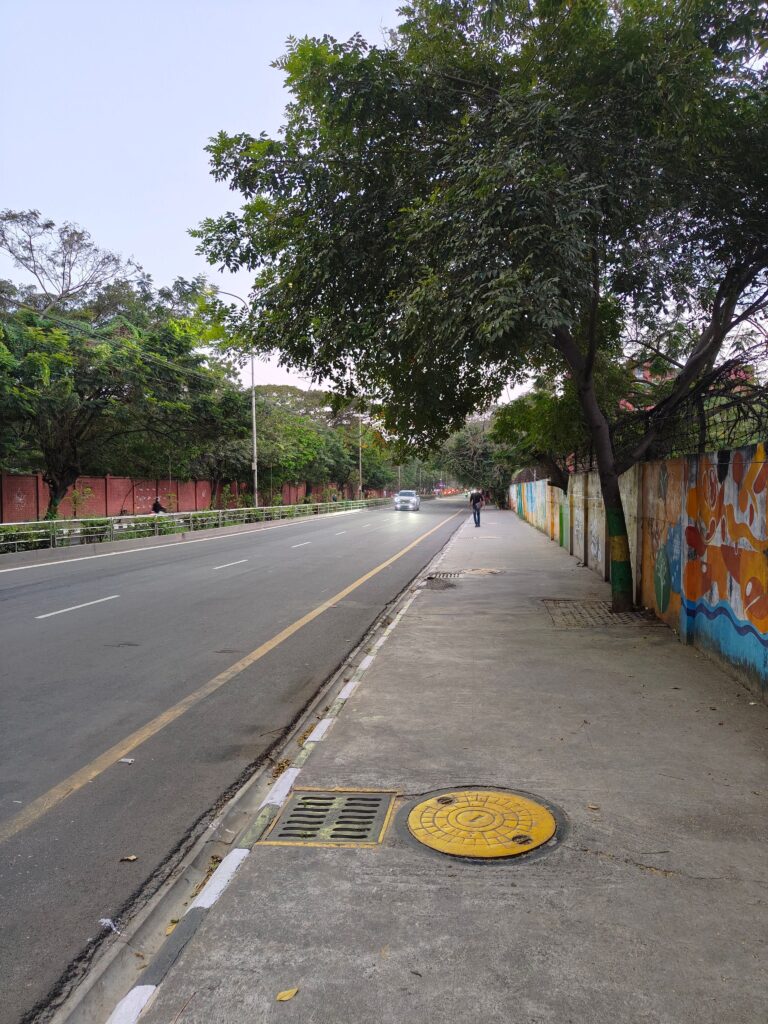
The Court named the duty bearers plainly: urban development authorities, municipal corporations, municipalities, even panchayats. The rule is now blunt — if a road exists, a proper footpath must exist too. This is an “enforceable duty,” not a polite request.
There is one gap. India has no law written just for the right to walk. The Motor Vehicles Act, the Court noted, was built around the vehicle, not the human. So the judges asked the government and the Law Commission to draft a real law — with a right, a duty, a remedy and a regulator, much like the Right to Education or the Right to Information.
What it means for you
For the grieving father, the Court restored compensation of Rs. 11,44,628. But the larger gift is for the rest of us. The next time a footpath is missing or blocked, it is no longer just bad planning. It may be a violation of your fundamental right, and you can seek a remedy.
The hard part starts now. A right on paper is easy. Footpaths on the ground are not. India lays new roads at record speed; whether it can build footpaths that are wide, unbroken and walkable will decide a simple question: are our cities built for people, or only for their vehicles?
Until that law arrives, here’s the good news. Your next walk is no longer a favour the city grants you. It is your right.