
Former Bogotá mayor Claudia López stated, “Building flyovers for cars in the middle of a city is a crime” a provocative statement in Bengaluru in 2024, while discussing the city’s plans for elevated corridors. Her argument was not that cars have no place in cities. It was that pedestrians, public transport and people should come first when we decide how to spend money and space.It is a strong statement. But it made me think about Vadodara, a city in the western part of India, best known for Lakshmi Vilas Palace, an architectural masterpiece.
A Flyover Above, a Quieter Street Below
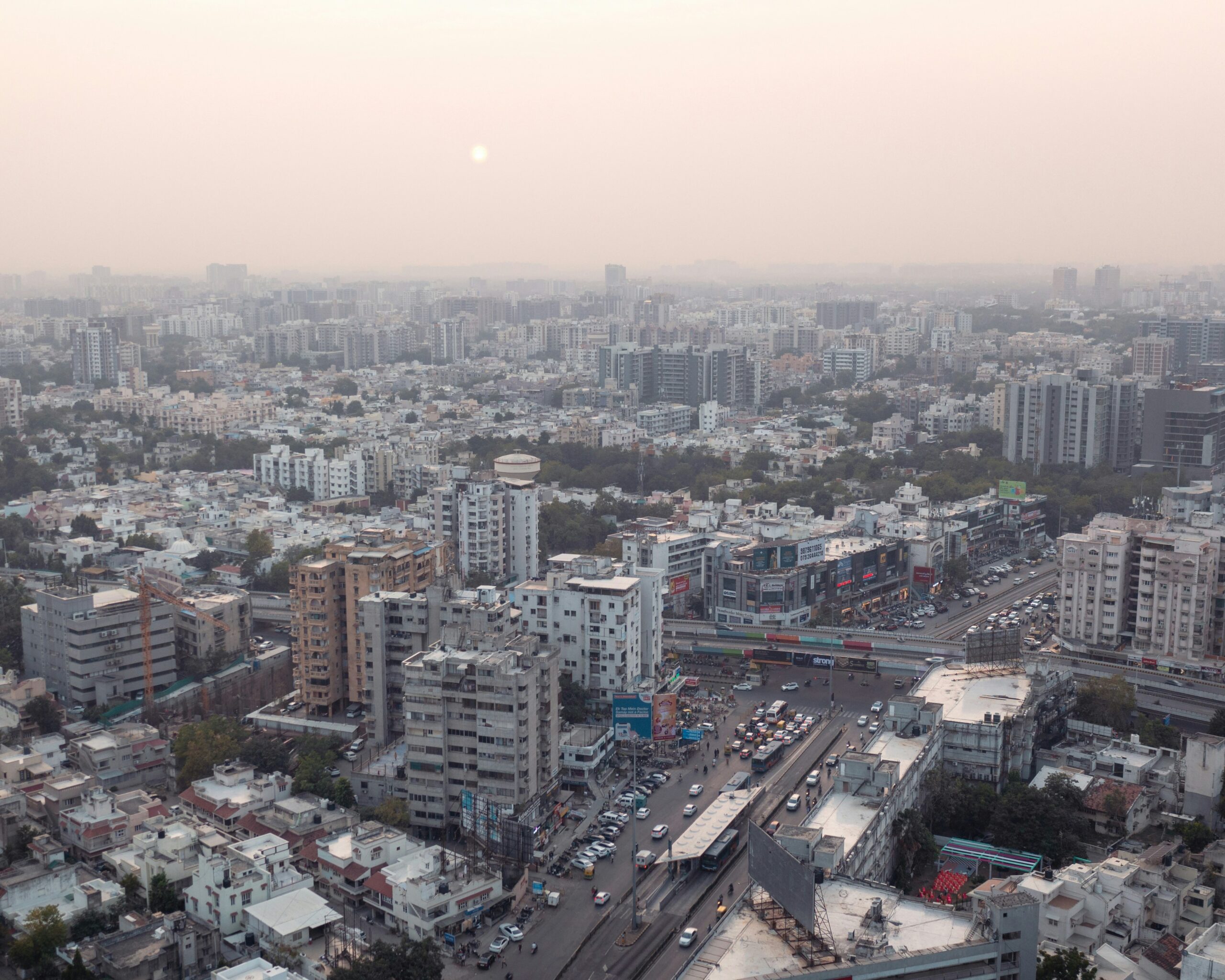
You cross the Atal Bridge from Genda Circle to Manisha Chowkdi and feel a brief sense of speed. Finally, a flyover to beat the jams, right? Yet step back down to street level and you see a different picture. Some familiar retail stores, cafés and restaurants appear quieter. A few have shut down or changed hands. Even Central Mall, once a prominent retail destination at Genda Circle, has now closed.
Is all of this because of the Atal Bridge? No. That would be too easy a conclusion. But it does raise a bigger question: when we build infrastructure to move vehicles faster, do we also think about what happens to the people, shops and streets around it?
What the Atal Bridge was Built to Solve in Vadodara
The Atal Bridge was built to ease traffic congestion on a busy stretch. It opened in December 2022, connecting Genda Circle and Manisha Chowkdi over roughly 3.5 km. On paper, the logic was simple: take traffic over busy junctions and cut travel time.
But the story does not end when traffic starts moving on top of the bridge.
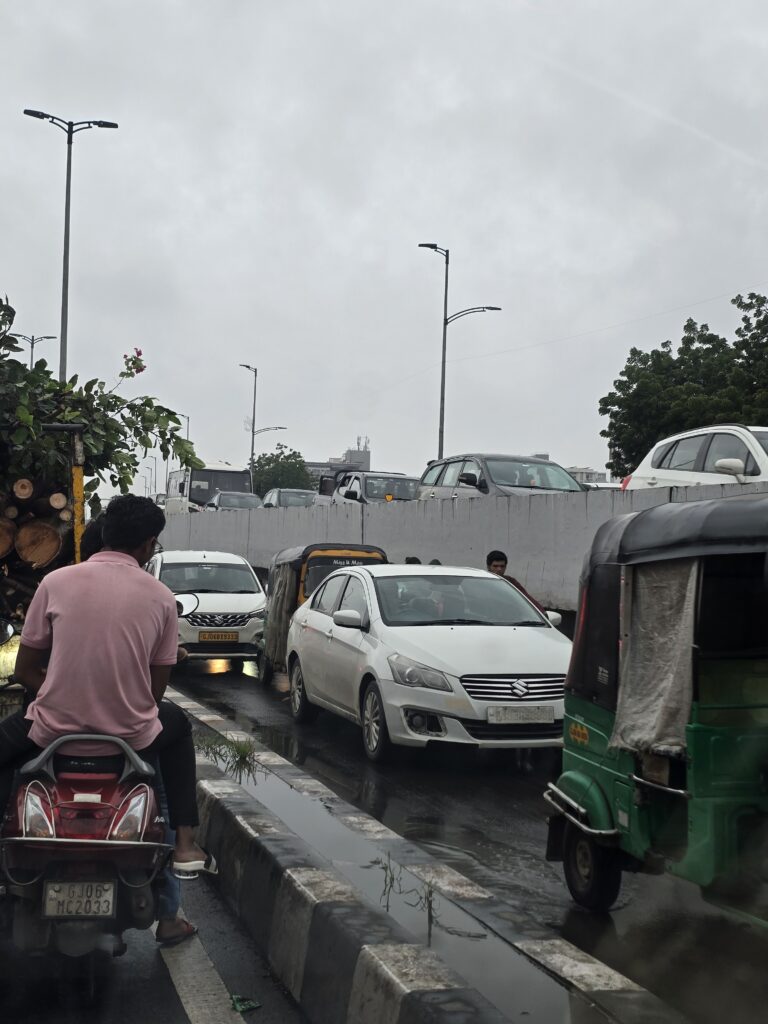
Within months of its opening, traffic pileups were being reported at junctions below, where vehicles coming off the ramps, service roads and the main road converge. In 2023, VMC even introduced a 30 km/h speed limit on the ramps amid concerns about snarls and sudden braking at key junctions.
The bridge may lift cars over one problem. But it can also change the movement patterns and pressure points around it. And this is where the conversation becomes interesting.
We Measure Traffic. What About the Rest?
When we evaluate a project like this, we usually look at traffic. Are vehicles moving faster? Has congestion reduced? Has travel time improved? These are important measures. But they are not the only ones that matter in a city.
What happens to the pedestrian walking below?
What happens to the person trying to cross the road?
What happens to the shop that depends on people noticing its signboard, finding parking nearby or simply walking past it?
What the Research Says About Walkable Streets
There is growing research behind these questions. A study of an urban ring road in Belo Horizonte, Brazil, found that the road acted as a barrier to pedestrian movement, with foot-crossing flows declining over time. Another study of more than 4,200 properties found that greater walkability was associated with higher values for retail, office and residential properties.
The relationship between pedestrians and shops is even more direct. Research published in the Journal of Retailing and Consumer Services has shown that pedestrian density can help predict store-entry patterns. In simple terms, people passing a shop are potential customers.
Recent evidence from India makes the point even more clearly. ITDP India’s 2026 Healthy Street Dividend study, covering street transformations across 10 Indian cities, found that businesses on improved streets reported an average increase of ₹4.37 lakh in annual turnover. More strikingly, 73% of businesses that saw higher pedestrian footfall also reported higher sales.
Not Every Closure is the Flyover’s Fault
This does not mean that pedestrian-friendly streets automatically make every business successful. Nor does it mean that every business that closes near a flyover has been harmed by it.
Central Mall itself is a good reminder of that. Its closure could have many explanations, and I have not found evidence that links it directly to the Atal Bridge. Retail changes because of competition, rents, consumer behaviour, management decisions, online shopping and many other factors.
That is precisely why we need to measure these changes rather than assume them.
More than sixty years ago, American urbanist Lewis Mumford was making a related argument about the growing dominance of the automobile. In The Highway and the City, he wrote that the city exists “not for the facile passage of motorcars, but for the care and culture of men.”
Mumford was writing about American highways, not Vadodara’s flyovers. But the question still feels remarkably relevant.
A City is More than a Network of Roads
What happens when we optimise one layer of the city, “vehicle movement”, and forget to measure the layers underneath?
A city is not just a network of roads. It is also a network of places where people walk, shop, eat, meet and spend time.
This does not mean we should stop building infrastructure. Vadodara needs better mobility. Cities need roads, bridges and public transport. The question is whether we can design them without sacrificing the life of the street.
Asking Better Questions Before the First Pillar
What if, alongside traffic studies, we also looked at pedestrian movement, shop entrances, parking, crossings, public transport stops and commercial activity? What if we compared these things before and after a major project? What if we tested different designs before construction begins?
Today, geospatial tools, traffic simulations and 3D modelling can help us do exactly that. We can ask which shops become harder to reach, where pedestrians will cross, what happens if a footpath is widened, and whether traffic can still move efficiently while the street remains accessible to people.
The technology is no longer the constraint. The bigger question is whether we are asking the right questions.
Moving Traffic and Keeping Streets Alive
The Atal Bridge is now part of Vadodara’s landscape. There is little value in asking whether it should have been built. The more useful question is what we do next. Can we make pedestrian movement safer and easier? Can we improve access to local businesses? Can the spaces around the bridge become useful public places, with seating, greenery and better connections?
And can future projects learn from this experience and ask these questions before the first pillar comes up?
Vadodara has huge potential as a liveable, retail-friendly city. Our infrastructure should certainly help people move through it efficiently. But it should also help keep the streets places where people want to stop, walk, shop, and spend time.
Perhaps the real challenge for the next generation of urban projects is not choosing between moving traffic and keeping streets alive. It is learning how to do both.
(The opinions expressed in this article are personal and do not reflect the views of my employer.)