

A large balcony, good daylight and cross-ventilation are now sold as premium features. But why have the basic needs of living become luxury amenities?
Walk into a new residential project in any growing Indian city, and the pitch is familiar. A swimming pool, gym, clubhouse, children’s play area, landscaped garden, theatre, games room, and sometimes even a co-working space. The list keeps getting longer.
These facilities once made a project stand out. Today, many are almost standard. Buyers expect them before they even ask.
But perhaps we are asking the wrong question.
The questions that matter
Instead of asking, “What amenities does this project have?”, perhaps we should ask, “What kind of everyday life does this home allow?”
Can the windows actually bring in a breeze? Does daylight reach the last bedroom? Can someone sit comfortably on the balcony? Can plants grow there? Can an elderly person sit in the morning sun? Can a child watch the rain? Can someone open a window and feel connected to the world outside?
These questions sound simple. Yet finding all the answers in one reasonably priced home is becoming surprisingly difficult.
How the basics became premium
A large balcony is now a luxury because it is hard to find one without paying a premium. Natural light is a selling point because homes are often planned to maximise usable area on expensive land. Cross ventilation is a feature because meaningful openings on opposite sides of an apartment are not always possible. Fresh air is worth advertising because the air outside is getting harder to breathe.
In other words, we are slowly being sold the things our bodies have needed all along.
There are, of course, reasons behind this. Land is expensive. Construction costs money. Cities are getting denser. Developers need financially viable projects. Buyers want more within their budgets. Every square metre has a price. These constraints are real, and they cannot simply be ignored.
But somewhere between these calculations, the quality of everyday living can get lost.
Selling the image, not the experience
The housing market has become very good at selling a lifestyle. One project promises a forest-like setting. Another offers a golf-inspired landscape. Another looks like a resort. The names and images change, but the formula feels familiar: towers, roads, lawns, trees and a long list of facilities.
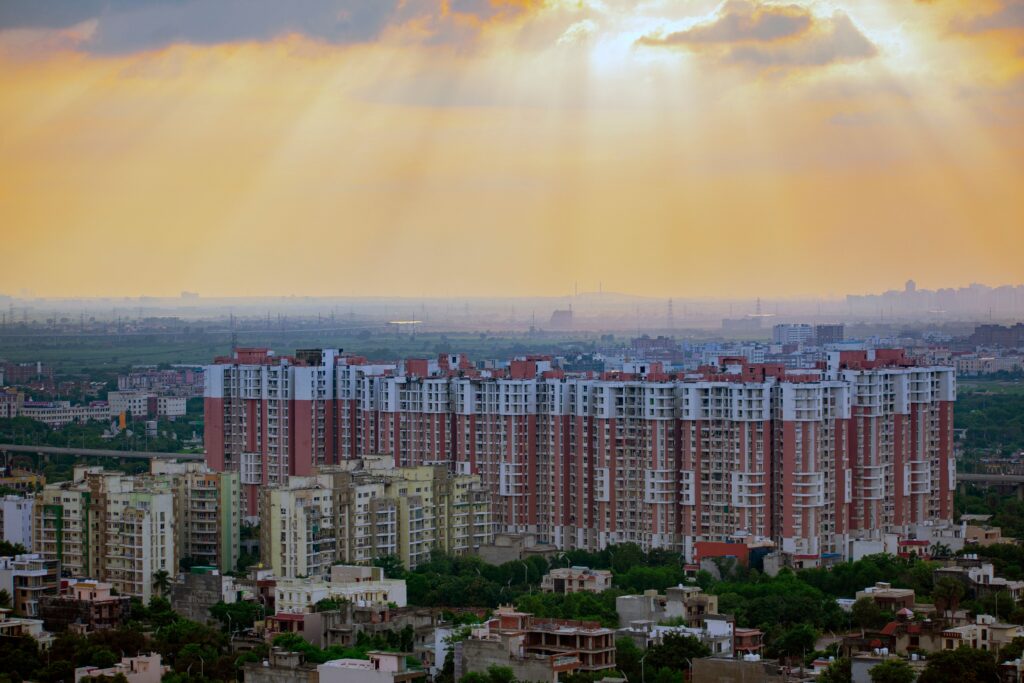
There is nothing wrong with pools, gyms, gardens or clubhouses. They can add real value to people’s lives. The problem begins when the image of good living becomes more important than the experience of good living.
A beautifully landscaped development cannot compensate for a dark bedroom. A large clubhouse cannot make up for poor ventilation inside the home. A swimming pool cannot replace a balcony where a family can actually sit together. A few trees around a tower cannot create the same experience as having nature as part of everyday life.
So what are we really selling?
The developer wants a viable project. The architect wants to design well. The buyer wants the best home they can afford. The city needs more housing. Yet all these reasonable demands can still produce spaces that are not very good to live in.
Beyond Vastu and bylaws
India already has several ways of thinking about how buildings should work. Vastu considers direction and orientation. Building regulations define setbacks, margins and open spaces. Architects think about structure, light, ventilation, circulation and services. All of these matter. We are all part of this system.
But there is another layer that is harder to put into a drawing or checklist: How does the home feel?
A building can follow every rule and still feel dark. It can meet the required setbacks and still feel poorly ventilated. It can be technically correct and emotionally uncomfortable. It can look luxurious and still make everyday life difficult.
So perhaps the question is not whether we need more rules. It is why we need a rule at all to remind us that people need sunlight, fresh air, nature, privacy and space.
What if the home itself was the amenity?
Imagine a balcony large enough to sit in. A window that catches the morning sun. A bedroom with fresh air. A kitchen that can breathe. A bathroom with daylight. A small garden where something can actually grow. A quiet corner for an elderly person. A place where children can experience soil, plants, rain and shade.
None of this needs to be extravagant. It needs to be considered.
Good design is not always about adding more. Sometimes it is about giving people enough of what they already need.
This is not an argument against development. India needs housing, and the realities of land and cost are part of the challenge. But development cannot only ask, “How much can we build?” It must also ask, “How well can people live in what we build?”
Questions every buyer should ask
Buyers need to ask different questions too.
Before being impressed by the pool, clubhouse or grand entrance, stand inside the actual home. Open the windows. Look at the daylight. Feel the air. Look at the balcony. Notice where the trees are. Imagine waking up there every morning. Imagine being there ten years later. Imagine growing old there.
Then ask one simple question: Is this a good place to breathe, live, grow, wake up and come home to?
If the answer is no, perhaps we should be brave enough to say it.
Because the greatest luxury in a home may not be a swimming pool, a clubhouse or a spectacular façade.
It may simply be the freedom to live well.