

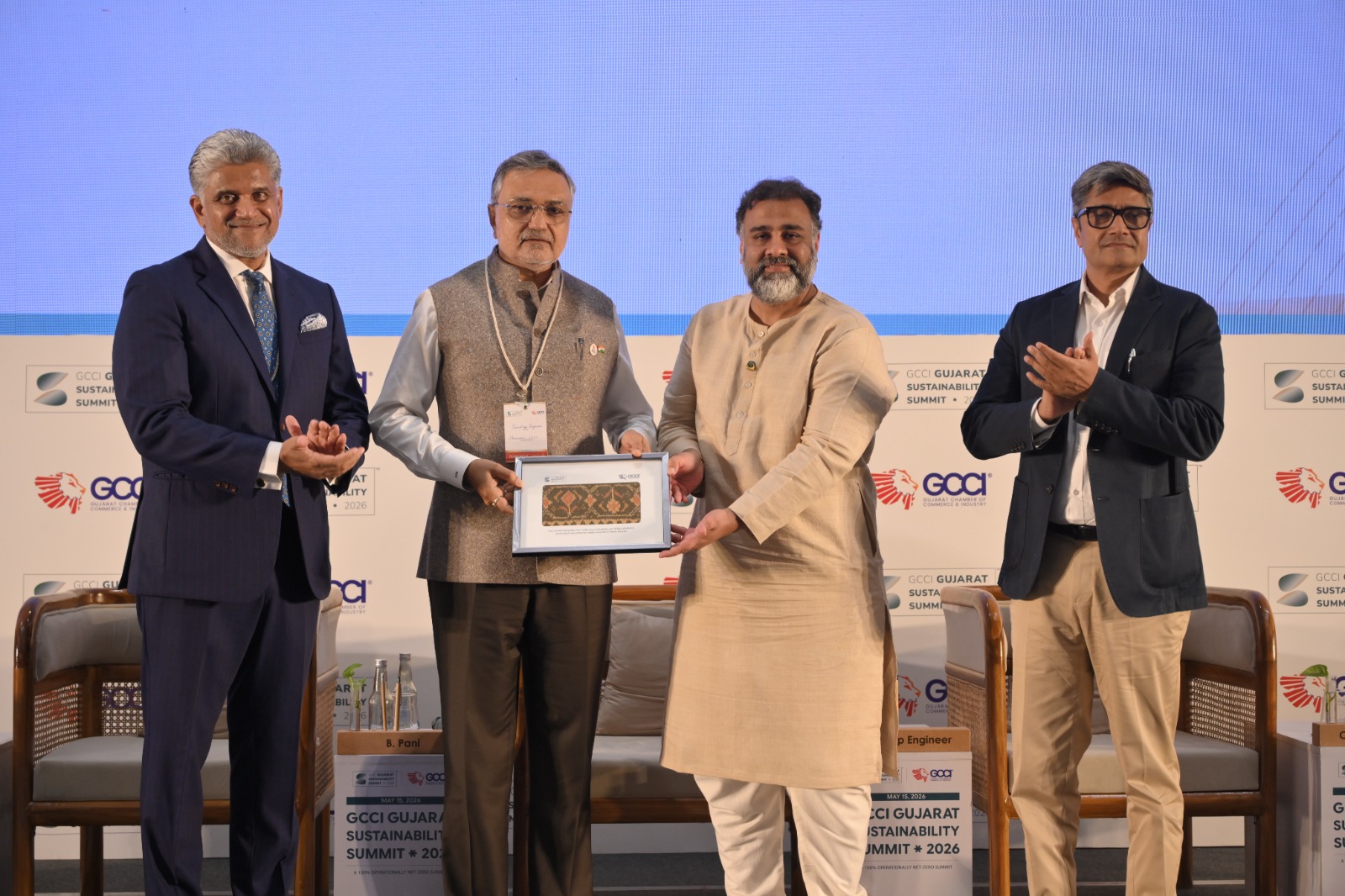
Ahmedabad, May 15, 2026: Can Gujarat become India’s model for sustainable industrial growth? The Gujarat Chamber of Commerce & Industry (GCCI) believes the answer is yes, and the second edition of the GCCI Gujarat Sustainability Summit 2026 (GGSS 2026) was designed to prove exactly that.
Held at Soulinaire, Ahmedabad, the summit brought together more than 1,000 delegates and over 40 speakers from industry, government, academia, and global sustainability networks. The theme this year — “Gujarat: India’s Engine for Sustainable Growth – Charting the Course to 2047 & 2070” — reflected a larger ambition: positioning Gujarat at the centre of India’s net-zero journey.
From Buzzword to Boardroom Priority
Sustainability discussions often remain trapped in presentations and policy documents. GCCI President Sandeep Engineer addressed this concern directly in his welcome speech.
He stressed that Environmental, Social and Governance (ESG) practices can no longer remain optional or symbolic. According to him, businesses must move beyond compliance and start treating sustainability as a core business strategy.
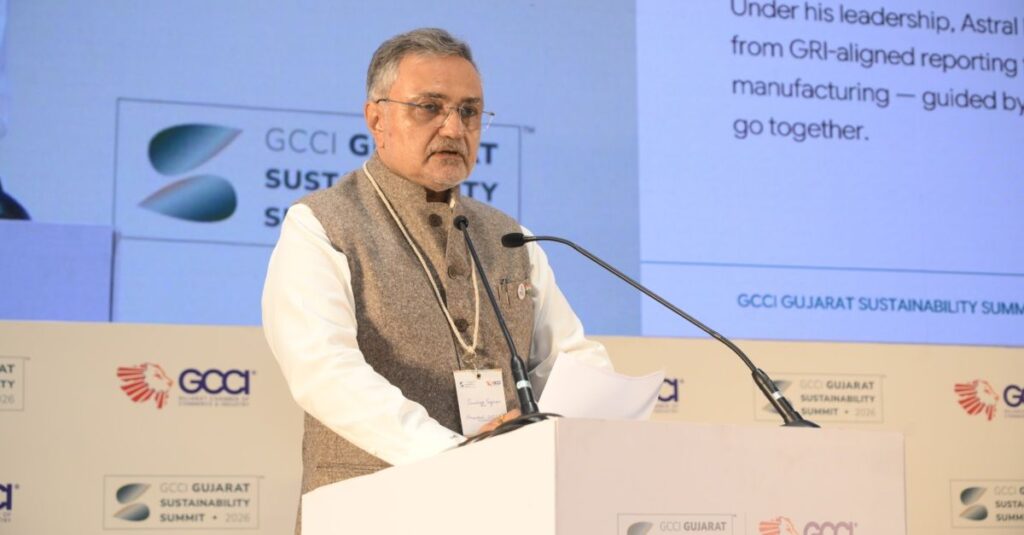
On the focus areas, Engineer said, “The three critical areas for Gujarat’s industrial ecosystem: Resource circularity, Social equity & Transparent governance.”
He also underlined the growing importance of carbon awareness for Indian companies competing in global markets. His message was clear: sustainability is no longer “good PR”; it is becoming essential for survival and competitiveness.
Urban India’s Climate Challenge
One of the most important conversations at the summit focused on cities.
Banchhanidhi Pani (IAS), Municipal Commissioner of Ahmedabad, spoke about the role urban local bodies will play in India’s climate future. He pointed to Ahmedabad’s work in waste management and green infrastructure as examples of how Indian cities can build climate resilience while continuing to grow economically.
For rapidly urbanising states like Gujarat, this balance is crucial. Cities are economic engines, but they are also major consumers of energy and producers of waste. The challenge is not whether cities grow, but how they grow.
Industry and Environment: Can Both Win?
A recurring theme across the summit was the idea that industrial growth and environmental responsibility do not have to be opposites.
Punit Lalbhai, Vice Chairman of Arvind Limited, shared how the company has adopted the “Triple Bottom Line” approach — balancing profit, people, and the planet. He spoke about large-scale water recycling initiatives and renewable energy integration within industrial operations.
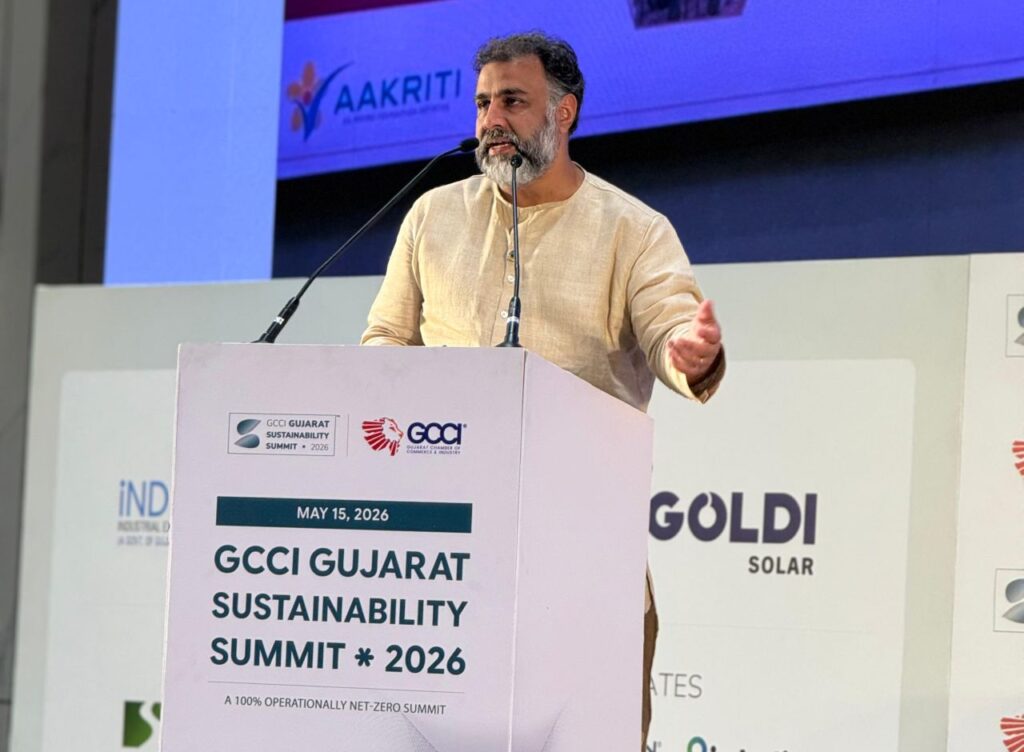
Speaking on ESG, Puneet Lalbhai said, “People often associate ESG with compliance, added cost, and obligation. But I think ESG should really be about one thing: making money while doing good with a real sense of commitment and empathy. When businesses approach it through that lens, the outcomes turn transformational rather than incremental. ESG improves efficiency, brings companies closer to customers, helps attract and retain talent, and lowers operating risk.”
He reflected a broader shift already visible in parts of the Indian industry: sustainability is increasingly becoming operational, measurable, and financially viable.
“Sustainability must begin where economics already make sense — through energy efficiency and renewable energy adoption. Gujarat is uniquely positioned with strong policy support and access to affordable solar and wind hybrid power, making green industrial choices commercially viable. But the real differentiator for businesses will be people. ESG initiatives must create workplaces where talent can stay, grow, and contribute meaningfully. While companies can start small, the vision must remain bold.
Punit Lalbhai, Vice Chairman, Arvind Limited.
On the role of business association, Lalbhai said, “Institutions like GCCI can play a vital role in bridging creativity gaps, mobilising capital, and making sustainability more accessible for SMEs. With multiple global headwinds ahead, our success will depend on how quickly we adapt, collaborate, and invest collectively in creating long-term value.”
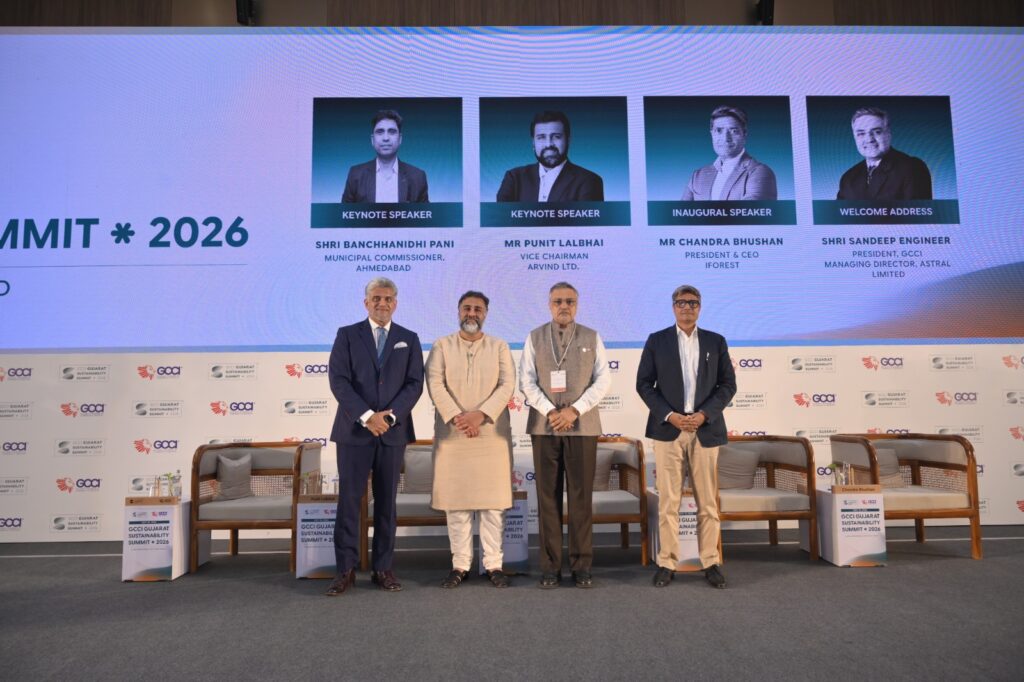
Meanwhile, Chandra Bhushan, President & CEO of iFOREST, offered a wider global perspective. He argued that India’s pathway to becoming a developed nation by 2047 must be based on a “Just Transition”, one that balances economic growth with environmental protection and social inclusion.
In simple terms, the green transition cannot leave workers, smaller businesses, or vulnerable communities behind.
Big Conversations, Practical Themes
Unlike many conferences that stay theoretical, GGSS 2026 focused heavily on implementation.
Technical sessions and panel discussions explored practical challenges such as:
- Financing MSMEs for clean energy transition
- Carbon markets and low-carbon growth
- Sustainable infrastructure
- Decarbonising supply chains and logistics
- The role of climate-tech start-ups
A dedicated masterclass on preparing MSMEs for low-carbon transition drew significant interest, especially since smaller businesses often struggle with access to finance, technology, and ESG expertise.
The summit also hosted a roundtable discussion on gender diversity in modern workplaces — a reminder that sustainability is not only about emissions and energy, but also about inclusive growth.
Strengthening the Skilling-to-Employment Pathway for Women for Viksit Gujarat 2047
The roundtable on Gender Equity in the Modern Workforce at the GCCI Sustainability Summit 2026 explored how gender inclusion is no longer a peripheral CSR conversation but an essential component of responsible business and ESG-led growth. The discussion highlighted the growing role of frameworks such as BRSR disclosures, SEBI’s gender-related indicators, and POSH compliance in shaping corporate accountability, while also examining deeper structural and social barriers that continue to impact women’s participation in the workforce.
Speakers include Neharika Vohra, Prashant Das, PhD, Anar Modi, Binjan Sheth, Dr. Sunita Purushottam, Eleni Polychroniadou, Jigar Deliwala. Ph.D., Kumar Manish, Rayvanta Kumar, Shaan Zaveri, Sonica Aron, and Vikram Jain reflected on issues such as unequal leadership representation, pay disparities, intersectionality across age and socio-economic backgrounds, and the invisible burden of social norms surrounding marriage, maternity, motherhood, and caregiving.
The roundtable also stressed the importance of strengthening the skilling-to-employment pathway for women by ensuring industry-linked training, mentorship, apprenticeships, and career continuity opportunities. Participants emphasised that women’s workforce participation cannot improve without enabling infrastructure such as safe and reliable public transport, last-mile connectivity, working women’s hostels, childcare support, and secure workplace environments.
The conversation underscored that gender equity must move beyond tokenism and low expectations towards building ecosystems that enable choice, dignity, safety, mobility, and long-term economic participation for women in India’s evolving workforce.
This roundtable was organised and led by the Feminist Collective in Architecture.
Academia, Industry and Policy on One Platform
One of the summit’s strengths was the diversity of participation.
More than 25 institutions and knowledge partners joined the event, including IIT Gandhinagar, IIM Ahmedabad, CEPT University, CEEW, and i-Hub Gujarat. Sustainability leaders from global corporations also shared case studies and strategies for integrating ESG into business operations.
This mix of academia, policy, and industry is important because climate solutions cannot emerge in silos. India’s sustainability transition will require collaboration between governments, businesses, researchers, and innovators.
Practising What It Preaches
Perhaps the most notable achievement of GGSS 2026 was that the event itself was organised as an Operational Net Carbon Neutral Summit for the second consecutive year.
Using live monitoring systems to track logistics and attendee movement, organisers measured the summit’s carbon footprint and offset emissions through a structured sustainability initiative.
In a country where many sustainability conversations remain symbolic, this operational approach stood out.
The Road Ahead for GCCI Sustainability Summit 2026
The summit concluded with a strong call for collective action.
During the valedictory session, Sameer Sinha, Chairman of the GCCI ESG Taskforce, said that the real challenge lies in converting intent into measurable outcomes. He described the summit as a platform that connects policymakers, academia, and industry to localise global sustainability standards for Indian realities.
And that may ultimately be the biggest takeaway from GGSS 2026.
India’s net-zero future will not be built only in Delhi’s policy corridors or at global climate conferences. It will also be shaped in industrial states like Gujarat — inside factories, city offices, logistics hubs, classrooms, and boardrooms.
The transition has already begun. The question now is whether industry can move fast enough to match the urgency of the climate challenge.