

Ahmedabad, May 15, 2026: What if every cup of coffee, every air-conditioned conference hall, and every kilometre travelled to an event instantly showed its climate impact on a giant screen? That is exactly what happened at the Sustainability Summit 2026 in Ahmedabad, where the Gujarat Chamber of Commerce & Industry (GCCI) Sustainability Summit, along with sustainability partner Savvy Greens, transformed a business conference into a live carbon accountability experiment.
In what organisers describe as one of Gujarat’s first real-time carbon-tracked conferences, nearly 1,000 delegates watched the event’s emissions being measured live from food and travel to electricity and hotel stays. The summit ultimately recorded 22.12 tonnes of CO₂ emissions, offering a glimpse into how future business events in India may operate under growing ESG and climate accountability pressures.
Sustainability Was Not Hidden in a Post-Event Report for the GCCI Sustainability Summit
Traditionally, sustainability reports arrive weeks after conferences end — long after delegates have returned home. This summit flipped that model entirely.
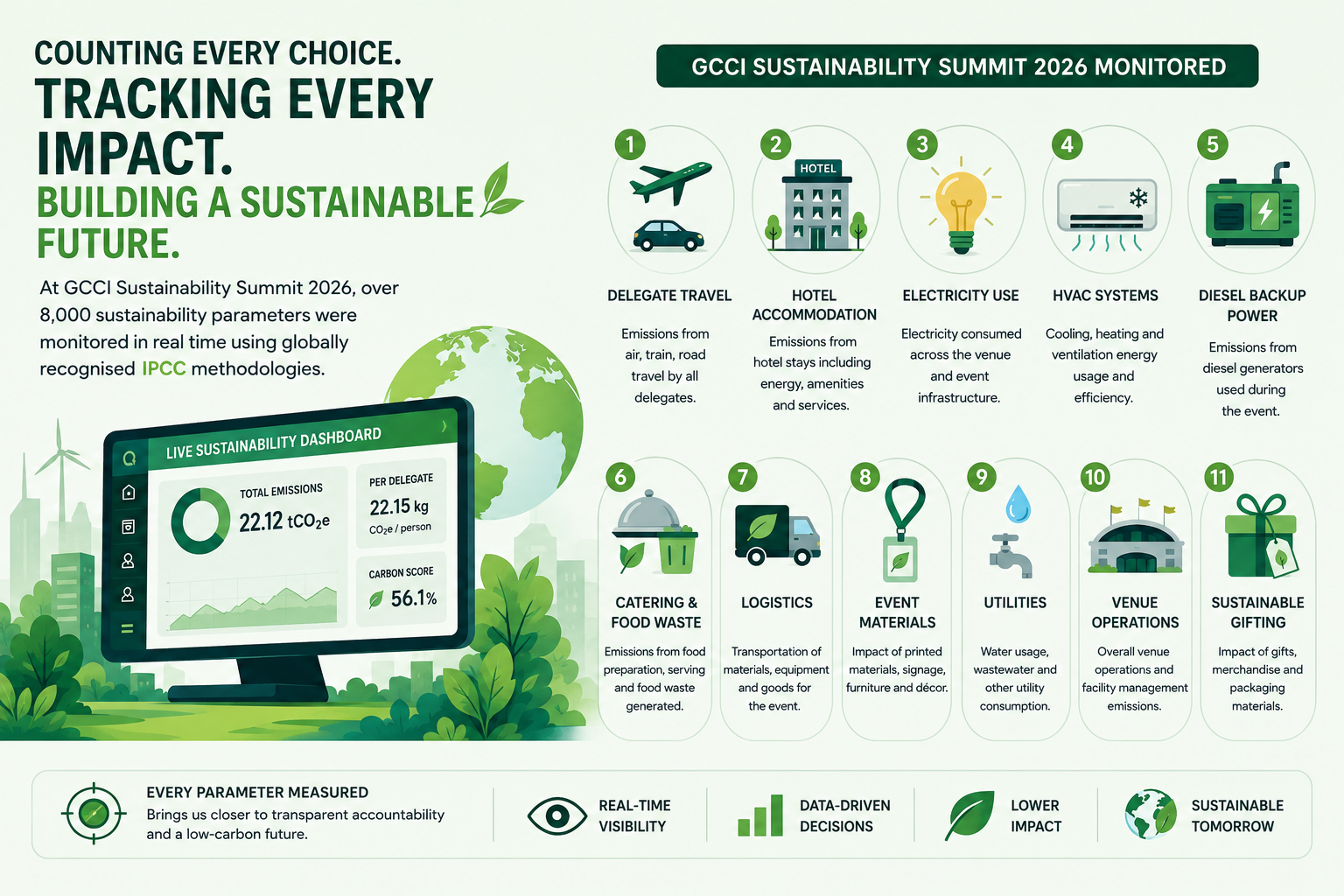
Instead of static reports, organisers deployed a live dashboard that continuously tracked environmental impact throughout the event. Every operational detail became measurable climate data.
The dashboard monitored over 8,000 sustainability parameters using globally recognised IPCC methodologies.
The result was a live sustainability scoreboard visible throughout the summit.
Key Live Metrics Displayed
- Total Carbon Emissions: 22.12 Tonnes CO₂e
- Per Delegate Emissions: 22.15 kg CO₂/person
- Attendance: Approximately 1,000 delegates
- Carbon Performance Score: 56.1%
- Offset Requirement: Equivalent to 23 carbon credits\
Organisers said the idea was simple: make emissions visible enough for people to emotionally connect with them.
“For the first time, sustainability was not hidden inside a report after the event ended. People could actually see emissions being generated live. That visibility changes behaviour and creates accountability in real time,” organisers shared during the summit.
Food Emissions Emerged as a Major Climate Challenge
One of the most surprising findings was the scale of emissions linked to food and catering.
While travel and electricity consumption were expected contributors, the dashboard showed catering emissions emerging as one of the largest climate impact areas during the event. Energy usage, attendee transportation, and accommodation followed closely behind.
This real-time visibility helped delegates understand something often overlooked in corporate sustainability conversations: operational choices matter.
A lunch menu is no longer just hospitality. It is climate data.
The summit highlighted how sourcing local food, reducing waste, and designing lower-carbon menus can significantly reduce emissions during large-scale gatherings.
The Rise of “Profitable Sustainability”
Beyond environmental awareness, the summit pushed another powerful idea — sustainability as a business opportunity.
Using the event’s emissions data, the platform calculated an estimated requirement of 23 carbon credits to offset the summit’s footprint. Organisers explained that measurable climate action creates verifiable environmental assets that businesses can potentially monetise or integrate into broader ESG strategies.
Industry leaders at the event described this model as “profitable sustainability”, where climate responsibility is no longer viewed purely as regulatory compliance or corporate branding.
Instead, accurate carbon measurement can help organisations:
- Improve ESG reporting
- Access sustainability-linked financing
- Participate in carbon markets
- Build climate-linked business value
- Strengthen investor confidence
This marks a significant shift in corporate thinking. Sustainability is slowly moving from “cost centre” to “strategic asset”.
Low-Carbon Operations Were Built Into the Event
The summit itself practised what it preached.
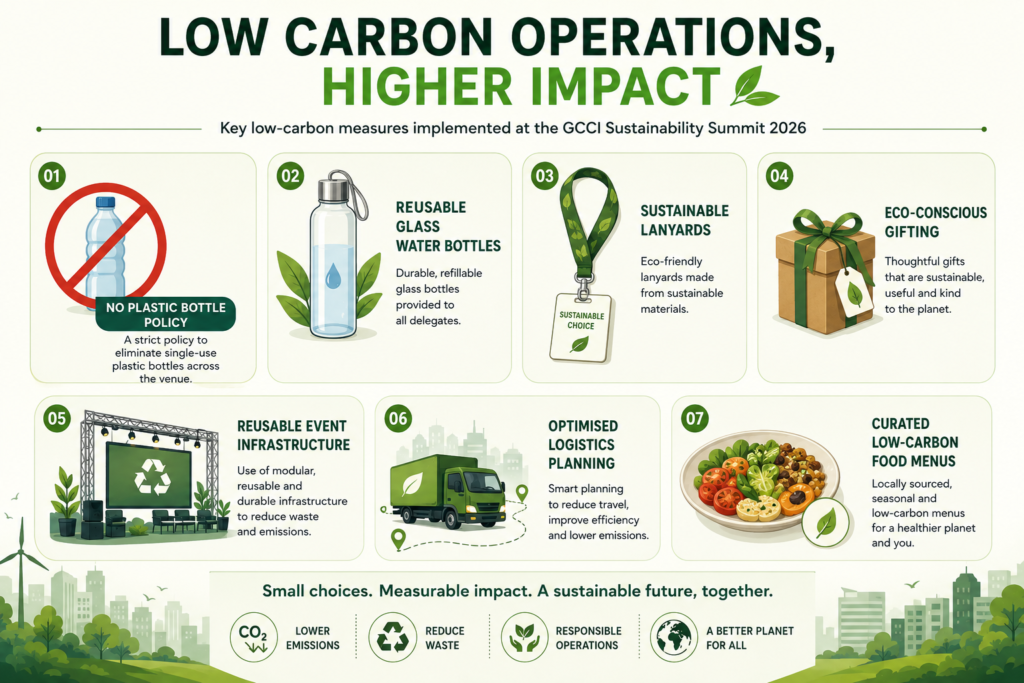
Organisers introduced multiple low-carbon operational measures across the venue, including:A strict No Plastic Bottle policy, Reusable glass water bottles, Sustainable lanyards, Eco-conscious gifting, Reusable event infrastructure, optimised logistics planning, & curated low-carbon food menus
The goal was not just to measure emissions, but actively reduce them without affecting delegate experience. That balance of sustainability without inconvenience may be one of the most important lessons for future events.
A Blueprint for India’s Future Conferences?
India’s corporate sector is increasingly moving toward net-zero commitments, ESG disclosures, and climate-linked accountability frameworks. In that context, the Ahmedabad summit may represent more than just a one-off experiment.
It may signal the beginning of a new standard.
Just as conferences today monitor attendance numbers, budgets, registrations, and engagement metrics in real time, carbon emissions could soon become another operational KPI displayed live on dashboards.
The summit identified several practical climate strategies for future events:
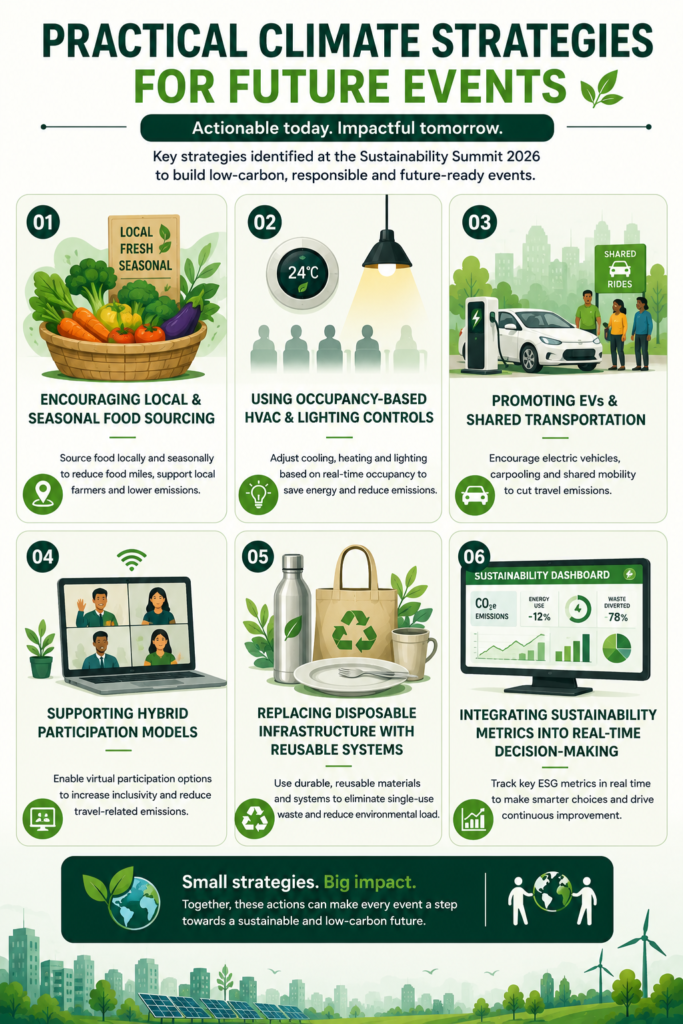
- Encouraging local and seasonal food sourcing
- Using occupancy-based HVAC and lighting controls
- Promoting EVs and shared transportation
- Supporting hybrid participation models
- Replacing disposable infrastructure with reusable systems
- Integrating sustainability metrics into real-time decision-making
For participants, the biggest takeaway was clear: sustainability works best when people can see it happening.
And perhaps that is the real innovation here, turning climate responsibility from an invisible back-end report into a live public conversation.
Why This Matters
Business conferences are often associated with high consumption of flights, hotels, air-conditioning, catering, and large-scale logistics. Yet they are also spaces where industries discuss the future.
By making emissions measurable, visible, and economically relevant, the event offered a possible roadmap for climate-conscious business gatherings across India. If replicated at scale, live carbon intelligence systems may soon become as normal at conferences as Wi-Fi passwords and digital registrations. And in a warming world, that shift may arrive sooner than expected.
Sustainability Summit 2026 didn’t just talk about climate action; it measured itself by doing it. With 22.12 tonnes of CO₂ tracked across 1,000 delegates and 8,000+ parameters, GCCI and Savvy Greens have shown what climate-conscious business events can look like when transparency is built into the venue, not bolted on afterwards. For the Indian industry, the message is direct: the next frontier of ESG isn’t reporting. It’s real-time.






[…] this month, that model showed up at the GCCI Sustainability Summit in Ahmedabad, hosted by the Gujarat Chamber of Commerce and Industry. Every drop of water served to delegates […]