

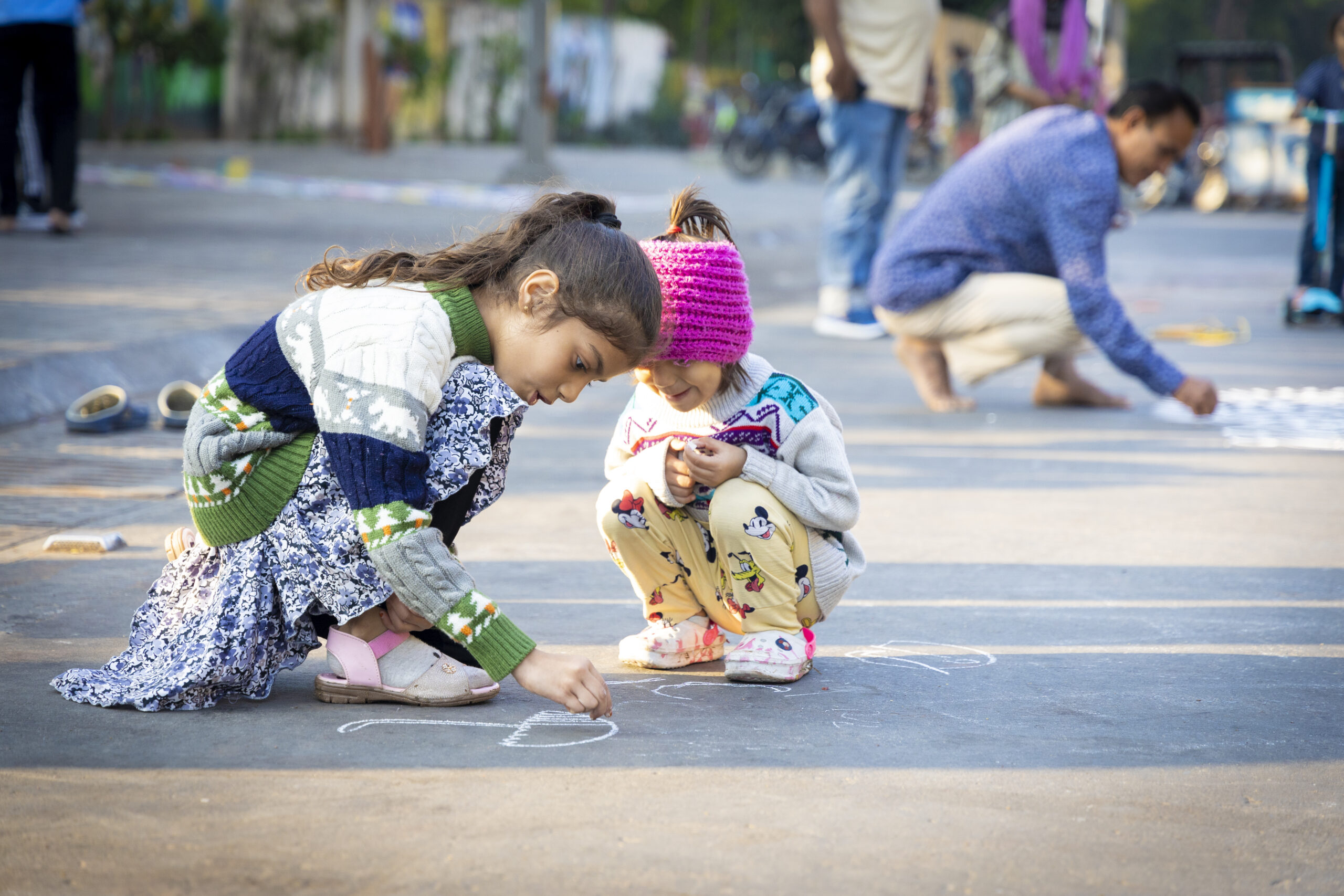
Ahmedabad: On most Sunday mornings, Law Garden wakes up differently. The sound of traffic fades. In its place come laughter, music, yoga mats, chalk art, and children racing freely across roads usually ruled by vehicles. This Sunday, Ahmedabad celebrates the 200th edition of Happy Street, a citizen-led urban initiative that has quietly transformed public space into a playground, community hub, and symbol of inclusive city-making.
Organised by aProCh in collaboration with Smart City Ahmedabad and the Amdavad Municipal Corporation (AMC), Happy Street has become one of India’s most successful examples of placemaking and child-friendly urban design.
From “Street Smart” to a Citywide Movement
The roots of Happy Street go back to July 2007, when aProCh first launched the “Street Smart” campaign to advocate for children’s right to safe and accessible public spaces. What began as an experimental idea has now evolved into a permanent Sunday fixture at Law Garden since July 2022. The success of Happy Street is a tribute to a multistakeholder movement. The initiative has seen unprecedented support from various schools, NGOs, corporates, and citizen groups. By integrating these diverse voices, the program has fostered a sense of “shared ownership,” where residents from all walks of life have made the street their own.
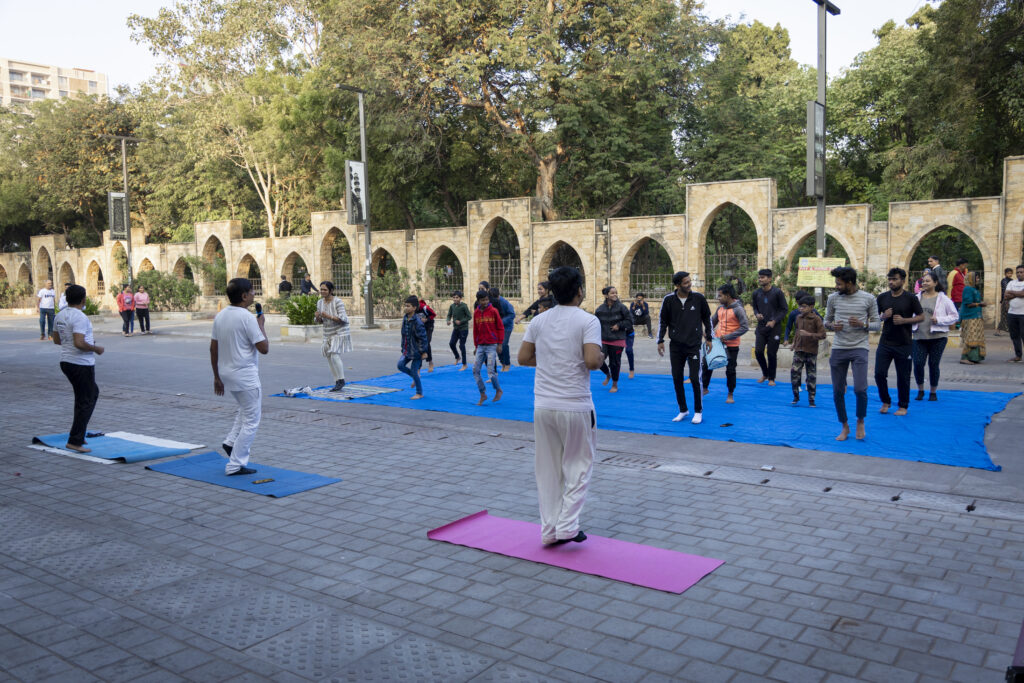
For two hundred Sundays, the streets have belonged not to cars, but to people.
Children draw on roads. Parents attend Zumba sessions. Senior citizens practise yoga. Artists host workshops. NGOs, schools, corporates, and residents all participate together.
The result is more than an event. It is a rare example of shared urban ownership.
“This milestone was built by every partner, corporate, and citizen who dared to imagine streets as hubs of joy rather than just transit. “What started as a dream to unite our community has become a profound movement of belonging where the street is a playground, and every citizen is a stakeholder.”
Kiran Bir Sethi, founder of aProCh.
Reclaiming the Right to Play Through Happy Street
At the heart of Happy Street lies a serious urban question: who really owns the city?
For children, especially in dense Indian cities, opportunities for outdoor play are shrinking rapidly. Parks are limited, streets are unsafe, and public spaces are often designed with vehicles—not people in mind.
Happy Street challenges that idea every week.
The initiative directly supports Article 31 of the United Nations Convention on the Rights of the Child (UNCRC), which recognises every child’s right to rest, leisure, play, and participation in cultural life.
By opening public streets to citizens, Ahmedabad has created a living example of what child-friendly urban planning can look like in India.
On the success of the initiative, Kirti Zala, CEO of aProCh, said, “Seeing Happy Street reach its 200th Sunday is a testament to the power of persistence. It brings a profound sense of pride and hope for our cities to be safe, livable, and inclusive.”
This milestone proves that cities become more livable and sustainable when they prioritise humans. It has been a journey of making children visible stakeholders in the urban narrative. We thank the Amdavad Municipal Corporation (AMC) for their visionary leadership in making Ahmedabad a national pioneer for child-friendly urban design from its inception.”
Kirti Zala, CEO of aProCh
More Than Recreation: A Public Health Space
Participants say Happy Street offers something cities increasingly struggle to provide — connection.
In an age of screen fatigue, fast-paced routines, and urban isolation, Sunday mornings at Law Garden have become a form of community therapy.
On experience, Meeta P, a resident, said, “I used to feel isolated in my home. Now, Sunday mornings at Law Garden are where I meet my ‘Sunday Family.’ My mental health has never been better.”
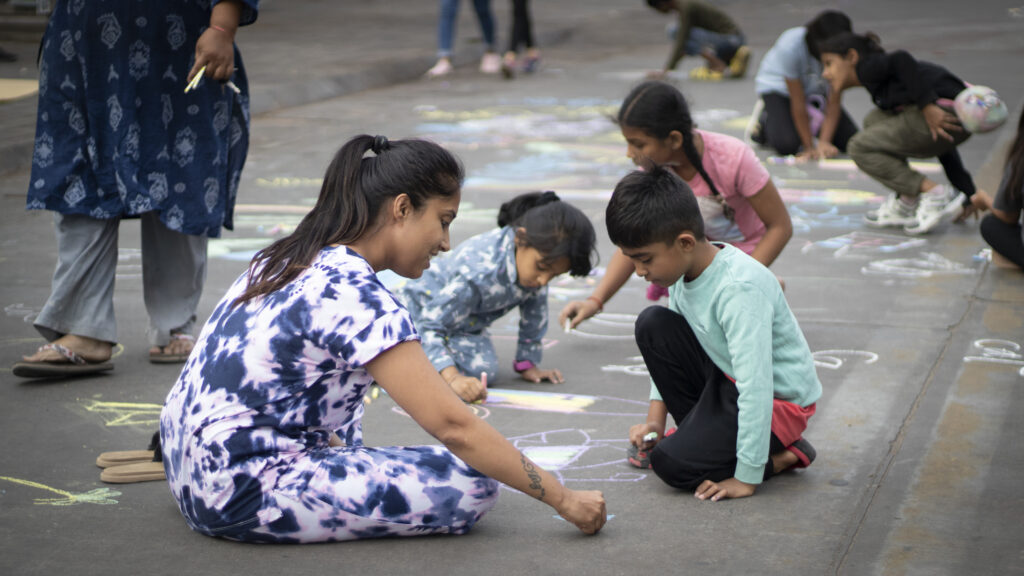
The benefits are not only emotional. Weekly physical activities like yoga, dance, sports, and walking have also encouraged healthier lifestyles among participants of all ages.
Urban planners often speak about “active public spaces.” Ahmedabad appears to have found a working model.
A Child’s View of the City
Perhaps the clearest measure of Happy Street’s success comes from the children themselves.
“Happy Street is my favourite place because I can draw and paint on the actual road,” It feels like the whole city is my canvas. One minute I’m doing Zumba with my mom, and the next I’m learning a new craft at the play zone. Being here makes me feel like the city really belongs to kids like me.” – 12-year-old Ananya.
That single sentence captures the larger achievement of the initiative: making children visible stakeholders in the urban narrative.
Ahmedabad as a National Pioneer of Happy Street
Across India, many cities are experimenting with open streets, pedestrian-friendly zones, and temporary car-free events. Few, however, have managed to sustain them consistently over time.
Ahmedabad’s achievement lies not only in launching Happy Street, but in keeping it alive every Sunday through strong institutional support, civic participation, and administrative backing from AMC and the Traffic Police.
The 200th edition celebration this Sunday will include Zumba, yoga, creative workshops, community play zones, and learning activities designed for families and children.
More importantly, it will celebrate a powerful urban idea: cities work better when streets are designed for people first.
And for at least a few hours every Sunday morning, Ahmedabad has shown the rest of the country exactly how that can be done.




The Happy Street event in Ahmedabad is a wonderful weekly initiative promoting health, happiness, and sustainable living. With recreational activities and social interaction, it encourages a cleaner and healthier city culture, strengthens community bonding, reduces pollution, and is also helpful to animals.
Such initiatives deserve great appreciation for inspiring active lifestyles, environmental awareness, and social harmony. Happy Street is truly a positive step toward building a vibrant and people-friendly city.