

Mumbai: A playground may be built for children, but its pull rarely stops with them. Parents catch up. Grandparents watch from a bench. Neighbours swap greetings. Done well, a play space becomes a shared part of community life. That is placemaking at its simplest.
Anyone who has lived in an Indian housing society knows the 6 pm scene. Children race around the swings. Mothers compare tuition schedules. Grandfathers settle the state of the nation from the bench. Nobody planned these friendships. The playground just gave everyone a reason to step out.
As housing and public spaces change, it’s worth seeing play spaces as more than recreation. They shape how people use their surroundings, build relationships and feel they belong.
More Than a Place to Play
Communities aren’t built by architecture alone. They grow out of everyday interactions, familiar faces and shared moments. A well-placed play space lets these connections happen naturally.
In many residential developments, families spend most of their time indoors. A good playground gives them a common reason to come out. Children meet and make friends. Parents and caregivers start talking. Over time, these small encounters become relationships that go beyond the playground.
Design matters here. Seating, shade, accessible paths and space for different age groups all make a difference. If children have somewhere exciting to play but adults have nowhere comfortable to sit, the space only half works. Good placemaking plans for everyone who uses a space, not just its youngest visitors.
When Play Becomes Part of the Neighbourhood
Upper Thane, Lodha Group’s 200-acre township on the edge of Mumbai, shows how this can work. More than 80% of its land is open space, so the development is built around its landscape.
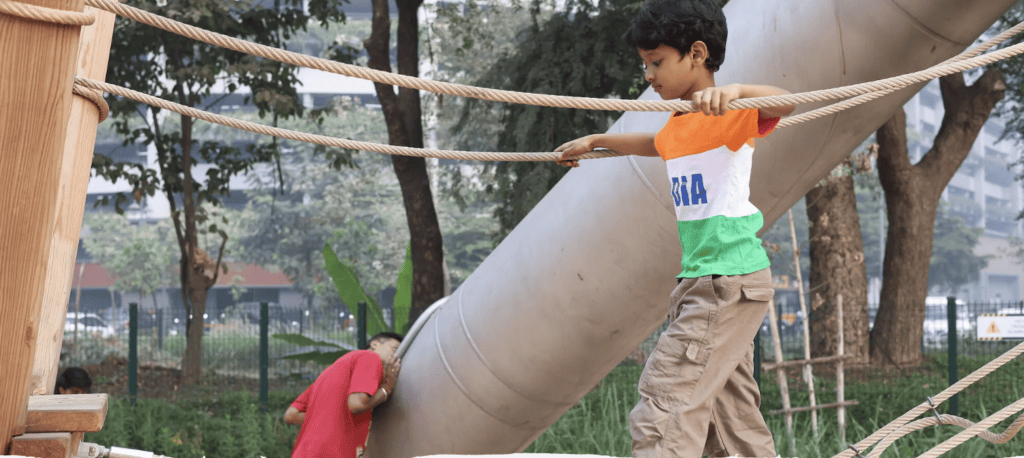
Its new playground opened to residents on Republic Day. It is built around treehouse-style structures set among existing mature trees. The layout works with the tree canopy instead of clearing it for standard equipment. Children climb, explore and play with the landscape, not just inside it.
What matters is how play fits into the wider green network. The playground connects to gardens, shared lawns and recreation areas. So stepping out becomes part of a family’s daily routine. The playground is part of the neighbourhood’s design, not an amenity tacked on at the end.
Bringing Different Generations Together
The social value of play shows up even more clearly in public spaces, where visitors are often strangers.
Western Park in Melbourne’s Docklands, Australia, was built as a play destination for a growing urban community. It has climbing structures, swings, slides and water play for children of different ages and abilities. Natural materials tie it to its surroundings, and community input shaped how it was developed.
The result goes beyond recreation. Families get a welcoming reason to be outdoors. Children explore alongside others. Residents and visitors get a common place to gather. In a district where people shuttle between home, office and mall, places like this help a neighbourhood feel connected.
Designing Spaces Where Everyone Belongs
Inclusion is the next test. A community space can’t bring people together if some children can’t take part.
The renewed Diana, Princess of Wales Memorial Playground in London’s Kensington Gardens shows one way to do it. Reopened in August 2026 after a £3 million renewal, it combines a large timber galleon, treehouses, water play and sensory features. Accessible routes and built-in play features let children of different abilities explore together, instead of being sent to separate facilities.
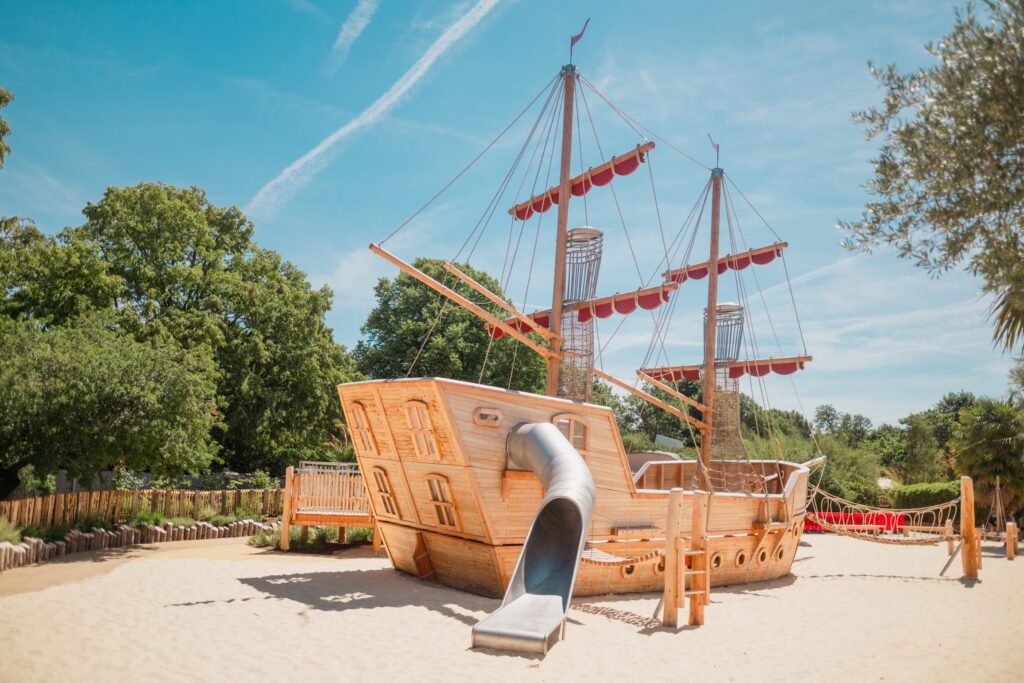
This turns access into shared play. Children connect through imaginative games, teamwork and discovery. Not bad for a place that already gets about a million visits a year.
Building Connections That Last
In the end, a play space shouldn’t be judged only by its equipment or how many children it holds. Its real value lies in whether people come back, whether every generation feels welcome and whether it becomes part of everyday life.
That means looking beyond the playground fence. Landscape, seating, accessibility, shade, maintenance and links to nearby public spaces all shape how people use it.
Children may be the ones climbing, swinging and inventing games. But the bonds formed around them can benefit a whole neighbourhood. Perhaps that is the truest test of a play space: not just that children have somewhere to play, but that communities have somewhere to come together.
Disclosure: Timberplay, where the author works, designed and delivered the Upper Thane playground and the new galleon and treehouse at the Diana, Princess of Wales Memorial Playground.