
delhi tod policy 2025: a 500-metre walk into the future of urban mobility announced at umi 2025
Imagine walking just 500 metres — on a shaded, vehicle-free path — straight to your RRTS or metro station in Delhi. No honking cars, no zigzagging through traffic. Just clean, safe, walkable access to public transport. This is envisioned under the Delhi TOD policy.
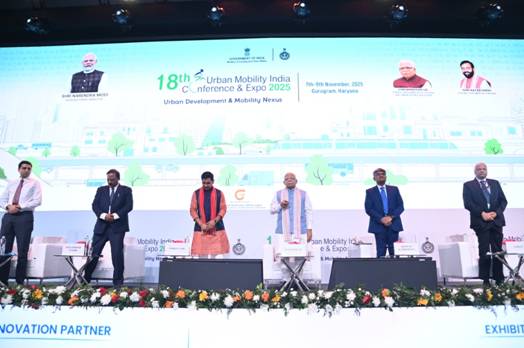
That vision is about to become reality with the upcoming Delhi Transit Oriented Development (TOD) Policy 2025, announced alongside the 18th Urban Mobility India (UMI) Conference & Exhibition in Gurugram. The initiative promises to make commuting in the national capital smoother, greener, and far more human-friendly.
Delhi’s Metro Miracle: From 248 km to 1,050 km
If there’s one thing Delhi does well, it’s scaling up. Back in 2014, the Delhi Metro spanned just 248 km. Fast forward to 2025 — the network now stretches over 1,050 km, connecting millions of commuters across the NCR.
With 1.15 crore people using it daily, Delhi Metro is now the third-largest metro network in the world, soon to move up to second place.
But even with this massive expansion, a key challenge remains — last-mile connectivity. For many, reaching the metro is still the toughest part of the journey. The new TOD Policy aims to change that completely.
Delhi TOD Policy 2025: 500 Metres, Zero Traffic
Under the new policy, special pedestrian corridors will enable people to walk up to 500 metres to metro and RRTS stations without having to step onto main roads. These corridors will feature green walkways, cycling tracks, and mixed-use developments, bringing homes, shops, and offices closer to public transportation.
In essence, the Delhi TOD policy wants to make walking and public transport the default choice for urban travel. It’s about designing cities around people, not vehicles — promoting compact, connected, and climate-friendly communities.
UMI 2025: India’s Cities on the Move
The 18th Urban Mobility India Conference 2025, inaugurated by Union Minister Shri Manohar Lal in Gurugram, set the stage for a national shift toward smarter mobility. The event, themed “Urban Development and Mobility Nexus”, drew over 1,600 transport experts, policymakers, and urban planners.
Highlighting India’s rapid progress, Shri Manohar Lal noted that the country’s metro systems now total nearly 1,100 km, making India a global leader in urban transit. He also announced plans to expand RRTS-like systems to other major Indian cities and the deployment of 10,000 electric buses under the PM e-Bus Sewa, including 100 e-buses for Gurugram.
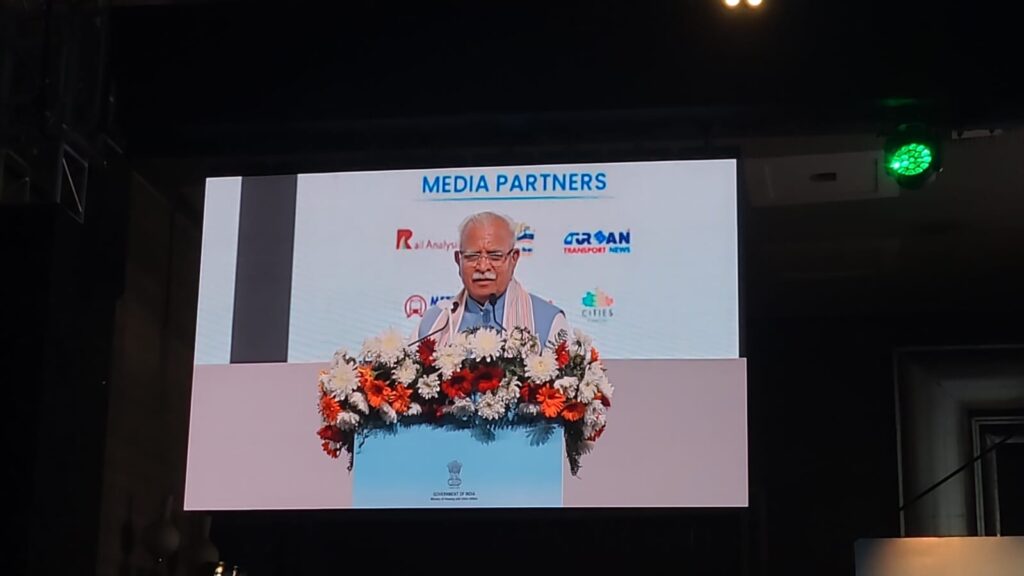
In his inaugural address, Manohar Lal extended greetings on the 150th anniversary of the national song ‘Vande Mataram’, and lauded the contribution of the UMI conference in shaping India’s mobility ecosystem.
He highlighted that with nearly 1,100 km of operational metro network, India has become the third-largest metro network in the world, soon to attain the second position. Referring to the PM e-Bus Sewa, the Minister announced the deployment of 10,000 electric buses across smaller cities, with 100 e-buses earmarked for Gurugram.
“Last-mile connectivity remains a critical challenge to improving metro ridership and assured that the Ministry will work closely with States to implement effective measures in this regard.”- Union Minister Manohar Lal
Importantly, the Delhi Metro Rail Corporation (DMRC) has been designated as the nodal agency for planning, coordinating, and managing Mass Rapid Transit Systems (MRTS) across India — leveraging Delhi’s expertise to build future-ready networks nationwide.
Why Delhi’s TOD Policy Matters
For millions of Delhiites, commuting isn’t just about getting from point A to B — it’s about survival. Hours lost in traffic, rising pollution, and unsafe roads have long been the norm. The Delhi TOD Policy 2025 seeks to reverse that by:
- Improving last-mile connectivity through walkable, transit-linked neighbourhoods.
- Reducing traffic congestion and emissions by encouraging public transport use.
- Boosting local economies via mixed-use, high-density zones near stations.
- Enhancing livability with green, inclusive urban design.
Tokhan Sahu, Minister of State for Housing and Urban Affairs, said, “Mobility is not merely a mode of transport but a driver of socio-economic growth.” The TOD approach aligns with that vision — reshaping cities into sustainable, equitable spaces for all.
The Road Ahead: From Policy to Pavement
The vision is bold, but success will depend on strong coordination between city planners, local governments, and communities. Ensuring accessibility, safety, and affordability will be key.
The UMI 2025 theme of integrating urban development with mobility planning couldn’t be more relevant. India’s urban future depends on how well its cities balance transport growth with environmental and social priorities.
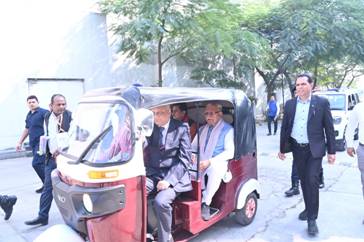
Manohar Lal took a ride in a retrofitted electric auto, showcasing India’s innovation in green mobility. The symbolism was clear — the future of transport is electric, inclusive, and integrated.
So next time you take the metro, imagine stepping off into a calm, green walkway — not a chaotic street. That’s what Delhi’s Transit Oriented Development policy promises: a short, peaceful walk into a sustainable tomorrow.
The three-day event is being jointly organised by the Ministry of Housing and Urban Affairs (MoHUA), Government of India, and the Government of Haryana, through the Institute of Urban Transport (India) and Gurugram Metro Rail Limited (GMRL).